Repair Versus Replace Windows: A Clear Choice
A window that sticks on a humid Davenport afternoon, fogs up between the panes, or lets rainwater creep onto the sill is more than an annoyance. It can affect comfort, energy use, security, and the condition of the wall around it. When weighing repair versus replace windows, the best answer is rarely based on one crack or one draft alone. The right choice comes from understanding what failed, how far the damage has spread, and what the window needs to do for your property going forward.
For a newer window with a localized problem, a targeted repair can be a practical, affordable fix. For aging units with repeated leaks, failing seals, or deteriorated frames, replacement may protect the property from larger expenses down the road. A smart inspection helps separate a repairable issue from a window that has reached the end of its useful life.
Repair Versus Replace Windows: Start With the Real Problem
Windows are made of several working parts: glass, glazing, seals, frames, tracks, hardware, screens, trim, and weatherstripping. A problem in one part does not always mean the entire window needs to be removed. The first step is identifying where the failure begins.
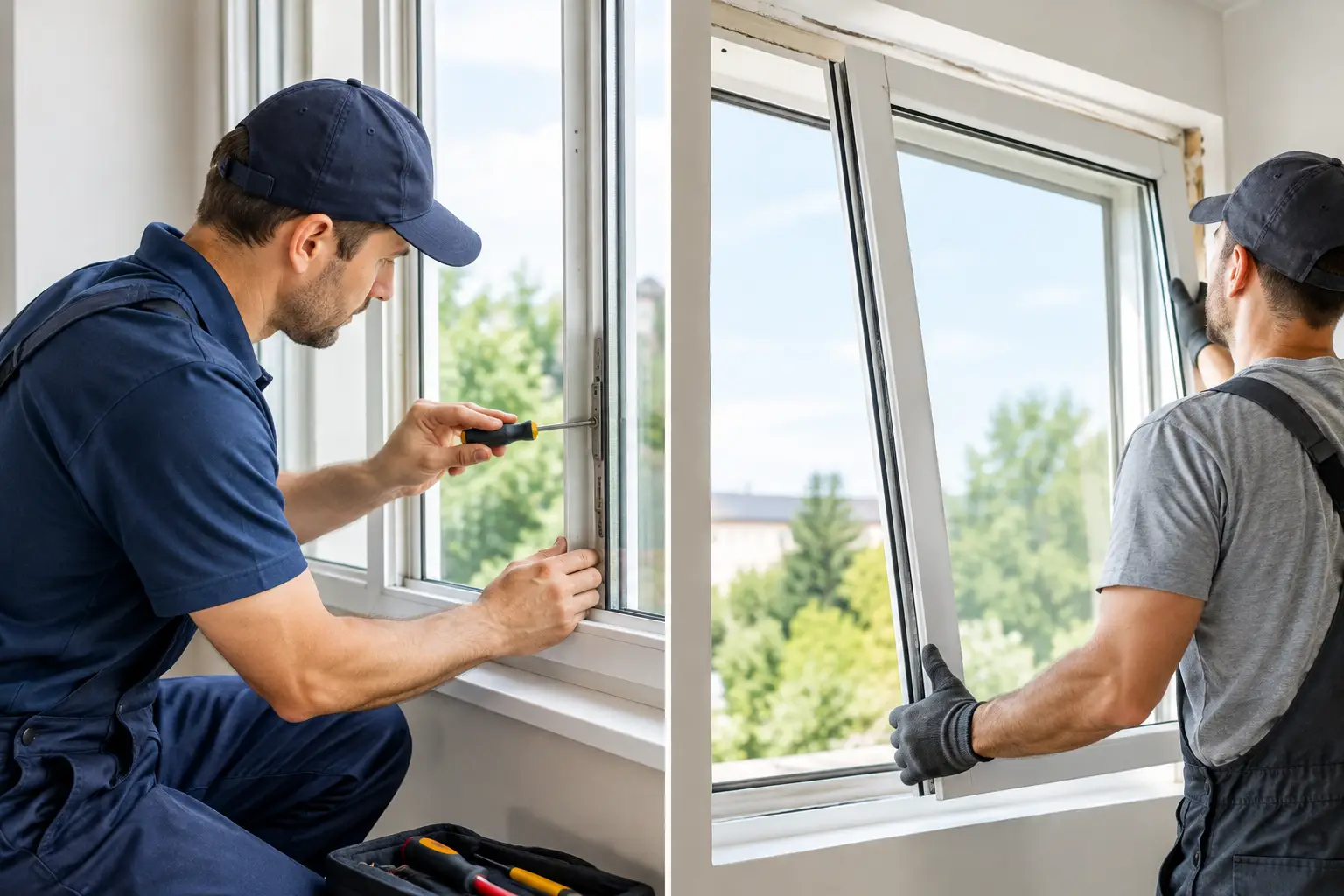
A draft, for example, may come from worn weatherstripping, a misaligned sash, or a loose lock that no longer pulls the window tightly closed. These are often repair issues. A window that will not slide or stay open may need track cleaning, balance repair, hardware adjustment, or replacement components. Damaged screens, minor trim damage, loose exterior caulk, and small areas of wood rot can also be addressed before they become bigger concerns.
Replacement becomes more likely when several parts are failing at once. If the frame is badly warped, the sill is soft from prolonged moisture, the glass seal has failed, and the window no longer closes securely, repairing one piece may only postpone the next problem. A professional inspection should look beyond the visible damage to check for water intrusion, structural deterioration, and air leaks around the full opening.
When Window Repair Makes Sense
Repair is often the better value when the window is relatively young, the frame remains solid, and the issue is limited. Property owners should not feel pressured to replace a complete unit just because a single component has worn out.
The glass is damaged, but the frame is sound
A cracked pane, chipped glass edge, or broken single pane can often be replaced without changing the entire window. The frame must be stable and properly sealed, but isolated glass damage does not automatically call for a full replacement.
For double-pane windows, fogging between the panes is a sign that the insulated glass seal has failed. In some cases, the glass unit can be replaced while keeping the existing frame. This can restore appearance and improve insulation at a lower cost than replacing the whole window.
Hardware, screens, or weatherstripping have worn out
Florida heat, humidity, and daily use can be hard on window hardware. Locks, cranks, latches, rollers, balances, and screens may wear down long before the frame does. Replacing these components can make a window easier to operate and more secure.
Fresh weatherstripping and quality exterior caulk can also reduce small drafts and help keep wind-driven rain outside. These repairs are especially useful for rental homes and commercial properties where timely maintenance protects the condition of the building and keeps occupants comfortable.
The issue is cosmetic or limited to trim
Peeling paint, small trim gaps, loose molding, or minor surface rot may be repairable when caught early. The key is confirming that water has not traveled behind the trim or into the surrounding wall. Exterior maintenance matters in Central Florida, where heavy rain and strong sun can quickly turn a minor opening into a moisture problem.
Repair is also a sensible option for owners who plan to sell, renovate in phases, or maintain the character of an older property. A well-executed repair can improve function and curb appeal without committing to a full window project before it is necessary.
Signs Window Replacement Is the Smarter Investment
Replacement costs more upfront, but it can be the more affordable decision when repairs are becoming repetitive or when the window is no longer protecting the property. Look for patterns rather than judging the condition on one symptom alone.
A window may be ready for replacement if it has widespread wood rot, a severely corroded metal frame, or a vinyl frame that is cracked or warped. These conditions can prevent the sash from sealing correctly and may allow water into the wall system. Repeated repairs to the same window are another clear warning sign. Replacing a lock or screen is one thing; paying again and again for leaks, rot, failed glass, and operational issues is another.
Replacement is also worth considering when multiple windows are old and inefficient. Older single-pane units, windows with failed insulated glass, and poorly fitted frames can make rooms feel hotter, especially on sunny exposures. Newer window options may offer improved glass performance, tighter seals, and better resistance to heat transfer. Energy savings vary by the home, window placement, HVAC condition, and the products selected, so it is wise to view efficiency as one part of the decision rather than a guaranteed payoff.
Security is another factor. A window that will not lock, has a compromised frame, or has damaged glass may leave a home, rental unit, or storefront more vulnerable. If a repair cannot restore secure operation, replacement should move higher on the priority list.
Consider Florida Weather Before You Decide
Davenport properties face a demanding mix of heat, humidity, seasonal downpours, and storm concerns. That local environment changes the repair versus replacement calculation.
Water is the biggest issue to investigate. Stains on drywall near a window, bubbling paint, swollen trim, moldy odors, or a soft sill can point to an active leak. The source may be failed caulk, damaged flashing, roof runoff, siding gaps, or the window itself. Replacing the window without correcting the source of the water can lead to the same damage later. Conversely, a window may appear to leak when the real problem is surrounding exterior maintenance.
Storm readiness also deserves careful attention. Not every older window must be replaced immediately, but windows that are loose, damaged, or difficult to secure should be inspected before severe weather arrives. Property owners may need to consider local building requirements, wind protection needs, and the condition of nearby trim or shutters when planning a replacement project.
Compare Cost, Timing, and Property Goals
The cheapest immediate option is not always the lowest-cost ownership decision. A small repair may be ideal when it restores dependable operation for years. It becomes less appealing when it is only buying a few months before a larger failure.
For homeowners, the decision may depend on comfort, appearance, and long-term plans for the house. For landlords and property managers, tenant safety, quick turnaround, recurring maintenance costs, and unit presentation often matter just as much. Commercial property owners may focus on security, weather protection, and minimizing disruption to daily operations.
Before approving work, ask for a clear explanation of the problem, the expected life of the repair, and what conditions could require replacement later. A quality estimate should distinguish between necessary repairs and optional upgrades. It should also account for related work, such as trim repair, caulking, painting, or correcting moisture damage around the opening.
A Practical Inspection Checklist
A careful window evaluation should answer four questions:
- Does the window open, close, lock, and seal as intended?
- Is the glass, frame, sill, and surrounding trim structurally sound?
- Are there signs of water intrusion, rot, mold, or damage behind the visible surface?
- Will a repair provide reliable service, or is the window likely to need additional work soon?
Davenport Handyman Services can help property owners assess visible damage, complete related trim and exterior repairs, and plan practical improvements with workmanship and budget in mind. For specialized window replacement needs, an on-site assessment helps ensure the scope matches the condition of the opening and the goals for the property.
The best window decision is the one that solves the real problem without overspending or leaving hidden damage behind. Address small issues promptly, investigate every sign of moisture, and choose a repair when it can deliver lasting performance. When the frame, seals, and structure are all failing, replacement can be the cleaner path to a safer, more comfortable property.