
Ductless Versus Central Air for Florida Homes
A Florida AC decision is rarely just about getting cold air. It is about keeping bedrooms comfortable through humid nights, controlling utility costs during long cooling seasons, and choosing equipment that makes sense for the way a property is built and used. When comparing ductless versus central air, the better option depends on your home’s layout, existing ductwork, comfort concerns, and plans for the space.
For many Davenport homeowners, central air remains the practical choice for whole-home comfort. Ductless mini-splits can be an excellent solution for additions, garages, converted rooms, rental units, and areas that never seem to cool evenly. The key is looking beyond the equipment price and considering the complete installation, maintenance, and day-to-day experience.
How Central Air Cools a Home
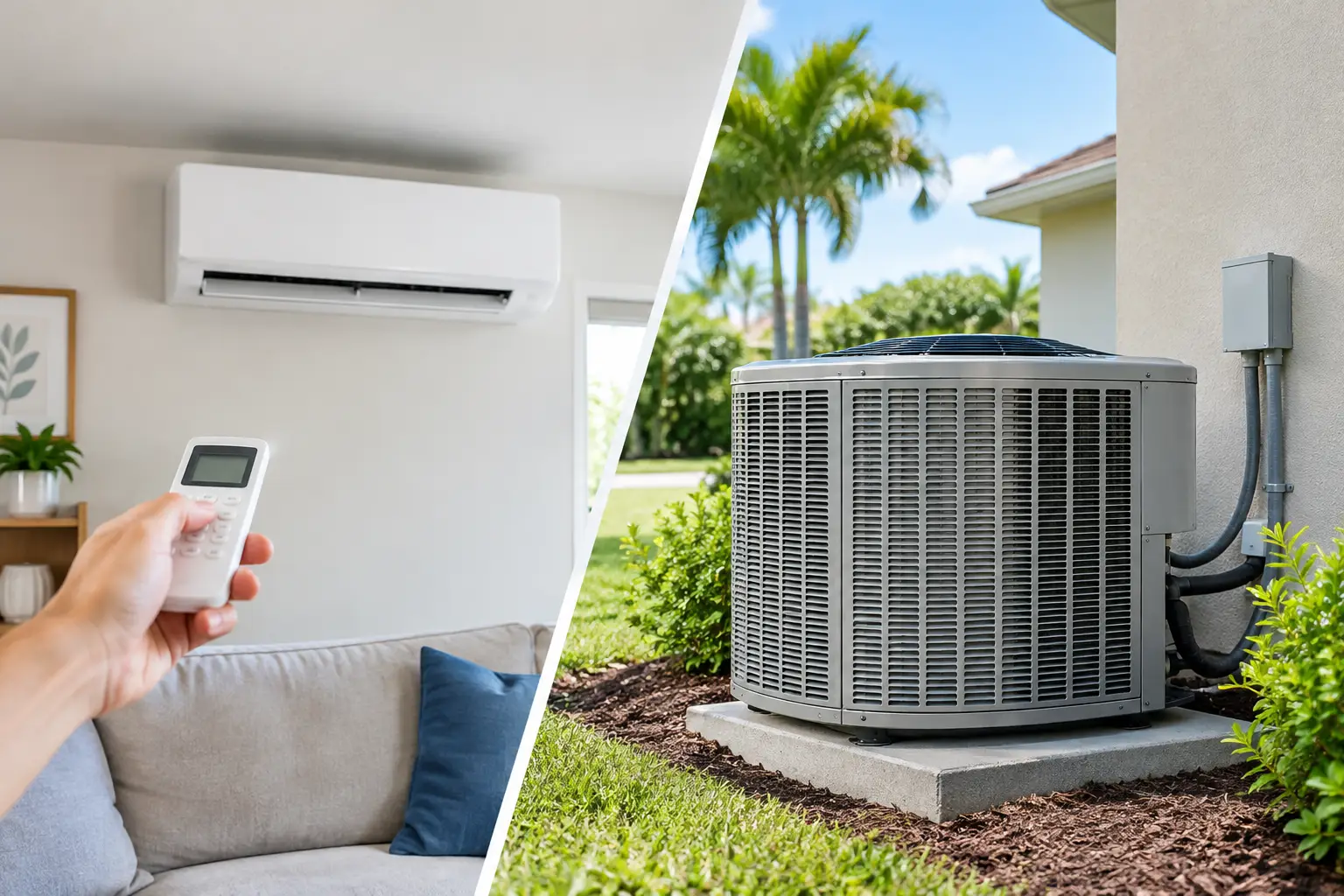
A central air system uses one outdoor condenser, an indoor air handler or furnace coil, and a network of ducts to distribute conditioned air throughout the house. A thermostat signals the system to run, and cooled, dehumidified air moves through supply vents while return vents bring indoor air back to be conditioned again.
This setup is familiar because it is designed to serve an entire home from one coordinated system. If your Davenport property already has properly sized, well-sealed ductwork, replacing or upgrading a central unit is often the most straightforward path. It preserves a clean appearance inside rooms, provides consistent operation through one thermostat, and can cool several bedrooms and common areas at once.
Central air also works well for households that want the same general temperature throughout the home. There will still be normal differences between sunny rooms, upstairs spaces, and rooms with more exterior walls, but a properly designed system helps reduce major swings.
The condition of the ducts matters just as much as the condition of the AC unit. Leaky, poorly insulated, undersized, or dirty ductwork can waste cooled air and make certain rooms uncomfortable. Replacing a condenser without addressing a significant duct issue can leave the underlying comfort problem in place.
Where Ductless Mini-Splits Make Sense
A ductless mini-split has an outdoor compressor connected to one or more indoor air handlers. Each indoor unit serves a defined zone and is controlled independently. Instead of relying on large ducts, the installer runs refrigerant lines, electrical wiring, and a condensate drain through a small opening in the wall.
Ductless systems are especially useful where extending ductwork would be expensive, disruptive, or impractical. A room addition, enclosed patio, garage workshop, detached office, converted attic, or guest suite may be a strong candidate. They can also solve a stubborn hot room without forcing the main central system to work harder for the entire house.
Because each zone has its own control, mini-splits can reduce arguments over the thermostat. A home office can stay cooler during the day while an unused guest room is not being heavily conditioned. That flexibility can be valuable in larger homes, rental properties, and commercial spaces with rooms that have different schedules.
There is a visual trade-off. Indoor heads are typically mounted high on a wall, though ceiling cassette and floor-mounted options may be available for certain layouts. Some property owners do not mind the appearance; others prefer the nearly invisible look of central vents. Placement should be planned carefully so the unit can distribute air effectively without becoming an eyesore.
Ductless Versus Central Air: Cost and Installation
Upfront price is not a simple ductless-versus-central-air contest. A single-zone mini-split for one room can be more affordable than adding new ductwork and expanding a central system. A multi-zone ductless setup serving an entire home, however, can become a major investment because every zone requires an indoor head, line set, controls, and installation labor.
Central air can be cost-effective when usable ducts are already in place. If a home has no ductwork at all, installing it may involve opening walls or ceilings, working around framing, and sacrificing some attic or closet space. In that situation, ductless equipment can avoid a substantial portion of the construction work.
Property owners should also account for electrical needs, drainage, insulation, permits, equipment efficiency, and any repairs needed before installation. For example, a garage conversion may need insulation improvements and electrical upgrades before any air-conditioning system can deliver dependable comfort. Cooling equipment cannot fully compensate for heat entering through an uninsulated ceiling, leaky doors, or sun-facing windows.
A detailed on-site inspection is the best way to avoid surprises. Accurate sizing should be based on the room or home’s square footage, ceiling height, insulation, window exposure, occupancy, appliances, and local heat load. Bigger is not always better. An oversized system may cool too quickly, run in short cycles, and remove less humidity than it should.
Humidity Control Matters in Central Florida
In Davenport, humidity is part of the comfort equation. Air conditioning removes moisture as it cools, but performance depends on correct sizing, run time, airflow, drainage, and maintenance. A home that feels clammy may have more than one issue, including duct leakage, a clogged drain line, poor insulation, or an AC system that is not operating as designed.
Central systems can provide effective whole-home humidity control when they are properly sized and maintained. Ductless mini-splits also dehumidify, and their zoning can help condition areas with different moisture loads. A laundry room, sunroom, or converted garage may benefit from targeted cooling rather than depending on distant central vents.
Neither option eliminates the need for good building maintenance. Keep exterior doors weatherstripped, address roof or plumbing leaks promptly, make sure bathroom exhaust fans work, and keep condensate drains clear. These practical details protect indoor comfort and help prevent moisture damage.
Energy Use and Everyday Comfort
Modern central and ductless systems can both be highly efficient. The right choice depends less on the label alone and more on how the equipment matches the property. Ductless systems can limit energy use by conditioning occupied zones rather than every room, but that advantage shrinks when multiple indoor units run constantly.
Central air may use more energy to cool a large home uniformly, especially if ducts pass through a hot attic or crawl space. Sealing and insulating accessible ductwork can make a noticeable difference. Smart thermostat scheduling, clean filters, clear outdoor-unit space, and routine service also support lower operating costs.
Comfort preferences should carry real weight in the decision. Choose central air if you want one system, discreet vents, and consistent whole-home cooling. Consider ductless if you need independent temperature control, are adding conditioned space, or want to solve one difficult room without rebuilding the entire duct system.
Maintenance Needs for Both Options
Every cooling system needs regular attention in Florida’s long AC season. Central air filters should be checked regularly and changed as needed. Supply and return vents should remain open and unobstructed, while the outdoor unit needs breathing room free of grass clippings, leaves, and stored items.
Ductless indoor heads have washable filters that need routine cleaning. Their coils, drain pans, and drain lines also need professional service to prevent reduced airflow, odors, water leaks, and performance issues. Since there may be several indoor units, maintenance involves more than one filter and more than one point of inspection.
If you notice weak airflow, ice, unusual noises, water around equipment, uneven temperatures, or a sudden rise in utility bills, schedule service before a small issue turns into a breakdown. Prompt AC attention is particularly valuable for rental properties and businesses where tenant or customer comfort cannot wait.
Make the Decision Around Your Property
There is no one-size-fits-all answer. A home with sound ductwork and a need for complete, consistent cooling will often benefit from central air. A property with a new addition, detached space, difficult hot zone, or no existing ducts may be better served by ductless equipment. Some homes even use both: central air for the main living area and a mini-split for a garage conversion or sunroom.
Davenport Handyman Services can help property owners begin with a smart inspection and a clear plan for the room, system, or supporting repairs involved. Before choosing equipment, look closely at how the space is built, where comfort is falling short, and what will make the improvement last. The right solution should feel dependable on the hottest afternoon, not just look good on an estimate.