How to Fix Running Toilets Before Water Adds Up
That faint refill sound after everyone has left the bathroom is more than an annoyance. A toilet that runs intermittently can waste a surprising amount of water, raise a utility bill, and signal a worn part inside the tank. The good news is that many homeowners can fix running toilets with a quick inspection and one inexpensive replacement part.
Before removing anything, take a minute to identify what the toilet is doing. Is water flowing continuously into the overflow tube? Does the bowl refill every few minutes even when no one flushes? Or does the toilet run only after flushing? Those details point to different causes and help prevent replacing parts that are still working properly.
Why a Toilet Keeps Running
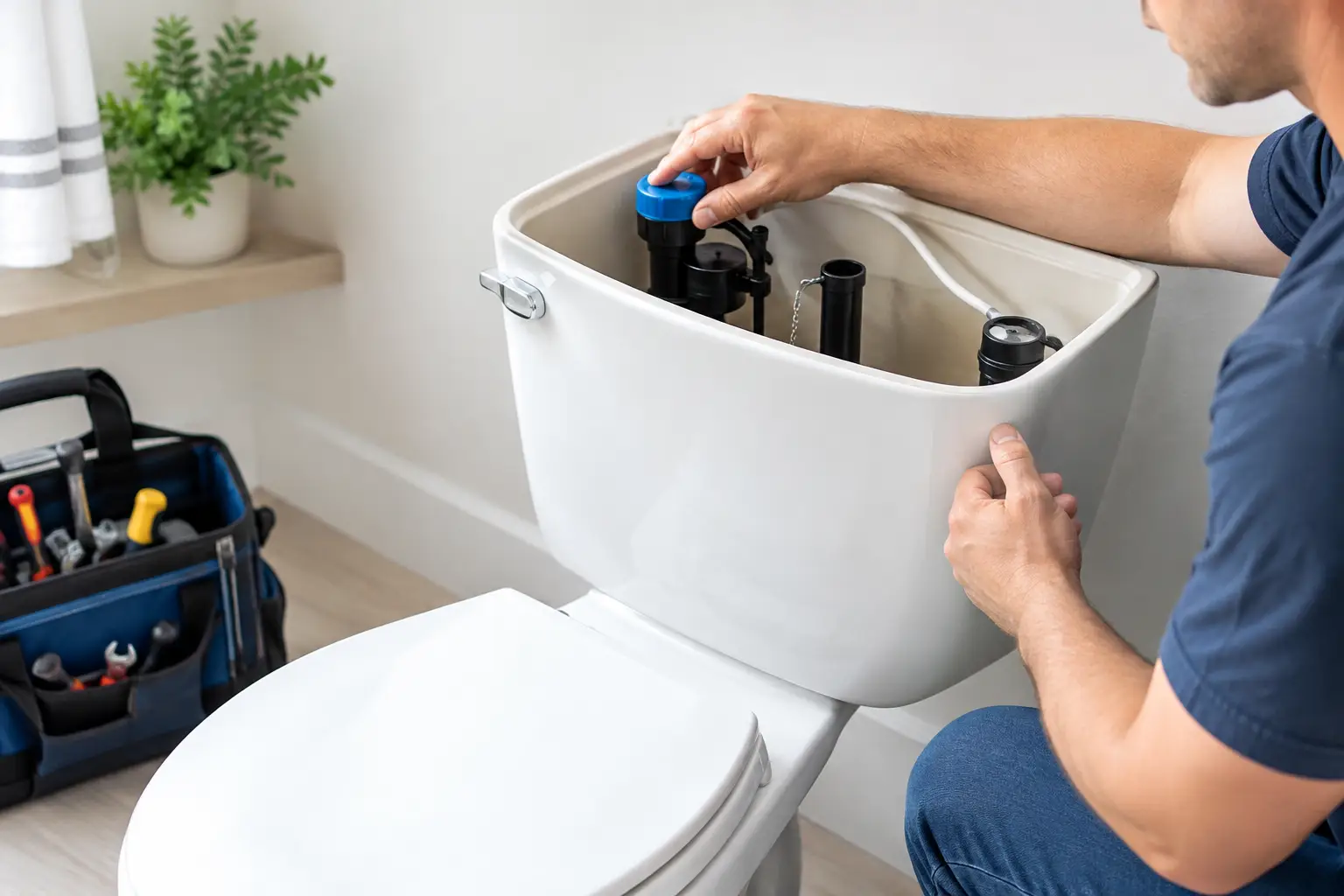
A toilet tank works with a simple sequence. Pressing the handle lifts the flapper, allowing water to move from the tank to the bowl. As the tank empties, the fill valve turns on to refill it. Once the water reaches the proper level, the float signals the fill valve to shut off.
When any part of that sequence fails, water keeps moving. Most running toilets come down to one of three issues: a flapper that no longer seals, a fill valve that does not shut off, or a water level set too high. A loose chain, misaligned refill tube, or buildup around moving parts can also be responsible.
In Central Florida, mineral deposits and regular wear can shorten the life of rubber and plastic tank components. A part may look fine at first glance but still leak slowly enough to cause repeated refilling.
Start With a Quick Tank Inspection
Lift the tank lid carefully and set it on a towel or stable surface. Porcelain lids can crack easily, and replacements are not always a perfect match. Flush the toilet once, then watch the components as the tank refills.
If water continues rising and spills into the open vertical overflow tube, the fill valve or float adjustment is likely the issue. If the tank reaches its normal level, becomes quiet, and then refills later without flushing, the flapper is probably leaking water into the bowl.
For a simple flapper test, add a few drops of food coloring to the tank water. Do not flush. After 15 to 20 minutes, look in the bowl. Colored water in the bowl confirms that water is slipping past the flapper seal.
Turn the shutoff valve behind or below the toilet clockwise before making repairs. Flush once to lower the tank water level, then use a sponge or small cup to remove the remaining water if needed. If the shutoff valve is stiff, corroded, or does not fully stop the water, do not force it. That is a repair worth addressing before it becomes a larger plumbing problem.
How to Fix Running Toilets by the Cause
Replace a leaking flapper
The flapper is the flexible rubber or silicone piece at the bottom of the tank. It should sit flat over the flush valve opening and create a watertight seal. Over time, it can warp, crack, become coated with residue, or lose flexibility.
Disconnect the chain from the flush handle lever, unhook the old flapper from the overflow tube, and install a matching replacement. The chain should have a little slack when the flapper is closed. If it is too tight, the flapper may stay slightly lifted. If it is too loose, the handle may not lift it high enough for a complete flush.
Choose a flapper designed for your toilet model or bring the old one to the hardware store for comparison. Universal flappers can work well, but the wrong size or style may create another slow leak. Avoid dropping harsh cleaning tablets into the tank, as they can damage rubber seals and internal plastic parts over time.
Adjust or replace the fill valve
If water runs into the overflow tube, look at the water line inside the tank. The proper level is generally about one inch below the top of the overflow tube, though the tank may have a marked fill line.
Many modern fill valves have an adjustment screw or sliding clip that lowers the float and reduces the water level. Make small adjustments, then flush and allow the tank to refill. Setting the level too low can weaken flushing performance, so the goal is a full but controlled fill.
If adjusting the float does not stop the water, the fill valve may be worn or clogged. Replacing it is a common repair, but it requires disconnecting the supply line and removing the old valve from underneath the tank. Be sure the new valve is properly tightened and test carefully for leaks at the connection. Over-tightening plastic fittings can crack them.
Check the refill tube and flush handle
The small refill tube should clip to the top of the overflow tube. It should not be pushed far down inside it. A tube inserted too deeply can create a siphoning effect that slowly drains water from the tank and causes repeated refilling.
Also check the flush handle and lift chain. A handle that sticks or a chain caught under the flapper can hold the seal open. These are small adjustments, but they can save you from buying parts you do not need.
Clean buildup around moving parts
If the toilet components are not badly damaged, mineral buildup may be preventing smooth movement. Shut off the water and clean visible residue from the fill valve area, flapper seat, and overflow tube with a soft cloth. Do not scrape porcelain or use aggressive chemicals inside the tank.
Cleaning can help when buildup is minor. Still, a brittle flapper or unreliable fill valve should be replaced rather than repeatedly adjusted. A low-cost part is usually a better value than ongoing water waste and unreliable flushing.
When a Running Toilet Needs Professional Service
Some toilet repairs are straightforward, but a running toilet is not always just a tank problem. Call for service if the shutoff valve leaks, the toilet rocks at the base, water appears on the floor, the tank is cracked, or the bowl drains and gurgles without flushing. Those symptoms can point to a supply-line concern, failing wax ring, venting issue, or drain problem.
Older toilets can also have discontinued or unusual internal parts. In that situation, forcing a universal repair kit into place can lead to leaks or poor flushing. A professional inspection can determine whether a targeted repair makes sense or whether replacement is the more practical long-term choice.
For homeowners, landlords, and property managers who need a dependable repair without trial and error, Davenport Handyman Services can inspect the toilet, identify the source of the water loss, and complete the repair with careful workmanship. This is especially helpful when a running toilet is one item on a larger maintenance list, such as a leaking faucet, damaged flooring, or bathroom updates.
Keep the Problem From Returning
Check inside each toilet tank a few times a year, especially in rental properties or homes that sit vacant for part of the year. Listen after flushing to confirm that the fill cycle stops. Watch for condensation, slow leaks at the supply connection, and unusual changes in flushing performance.
A running toilet may seem minor, but it is one of the easiest household water problems to catch early. Addressing the sound now can protect your water bill, your bathroom floor, and the peace of mind that comes with a home that is working as it should.