How to Seal Driveway Cracks Before They Spread
A driveway crack can look minor on Monday and become a larger repair after a few weeks of Central Florida rain, heat, and vehicle traffic. Knowing how to seal driveway cracks early helps protect the base beneath the surface, improve curb appeal, and avoid paying for more extensive concrete or asphalt repairs later.
The right approach depends on what your driveway is made of, how wide the crack is, and whether the surface has shifted. A clean, properly filled crack can hold up well. A crack that is sealed over dirt, moisture, or failing material will usually reopen quickly.
Start by Identifying the Driveway Material
Asphalt and concrete driveways need different repair products. Asphalt is flexible and typically uses rubberized crack filler or a pourable asphalt crack sealant. Concrete is more rigid and generally requires a concrete crack sealant, masonry caulk, or a repair compound designed for exterior slabs.
Do not use an asphalt filler on concrete or a rigid concrete patch in a moving asphalt crack. The wrong product may look acceptable at first, but Florida temperature changes and heavy rain can cause it to separate from the driveway edges.
Also look at the crack pattern. A thin, stable surface crack is often a manageable maintenance project. Wide cracks, uneven edges, crumbling sections, or cracks that continue growing may point to a drainage issue, soil movement, tree roots, or a failing driveway base. Sealing those cracks is still useful for limiting water intrusion, but it will not correct the underlying problem.
How to Seal Driveway Cracks Step by Step
The best driveway crack repair starts with preparation. Skipping the cleaning and drying stages is one of the most common reasons fillers fail before their time.
Choose a Clear, Dry Day
Plan the repair when rain is not expected during the product’s recommended curing period. Most driveway sealants need a dry surface, and many need several hours without rain after application. In Davenport and throughout Central Florida, early morning work can be practical, but avoid applying filler to a surface that is damp from overnight dew.
Very hot pavement can make certain materials difficult to work with. If possible, work during a cooler part of the day while still allowing the repair enough daylight to cure.
Clean Out the Crack Thoroughly
Remove grass, leaves, loose stone, dirt, and failed patching material from the crack. A stiff wire brush works well for smaller cracks. For deeper cracks, use a flat screwdriver, narrow putty knife, or similar tool to loosen debris, then sweep or vacuum it out.
For a durable repair, the filler must bond to solid driveway edges. If the crack contains mud or packed soil, rinse it carefully and allow it to dry completely before sealing. A leaf blower can help remove fine debris and speed up drying, but it does not replace proper cleaning.
Before beginning, gather the materials needed for the job:
- A crack filler made for asphalt or concrete, depending on your driveway
- A wire brush, putty knife, and broom or shop vacuum
- Backer rod for deep or wide cracks
- Protective gloves and a caulk gun if using cartridge sealant
- A trowel or smoothing tool for larger repairs
Use Backer Rod for Deep Cracks
A deep crack should not always be filled from bottom to top with expensive sealant. For cracks deeper than about one-half inch, press foam backer rod into the opening first. It supports the filler, controls how much material is used, and helps create a more flexible seal.
Choose backer rod slightly wider than the crack so it stays in place. Set it below the driveway surface, leaving room for the sealant layer. The depth will vary by product, so follow the manufacturer’s label before applying filler.
Apply the Correct Filler
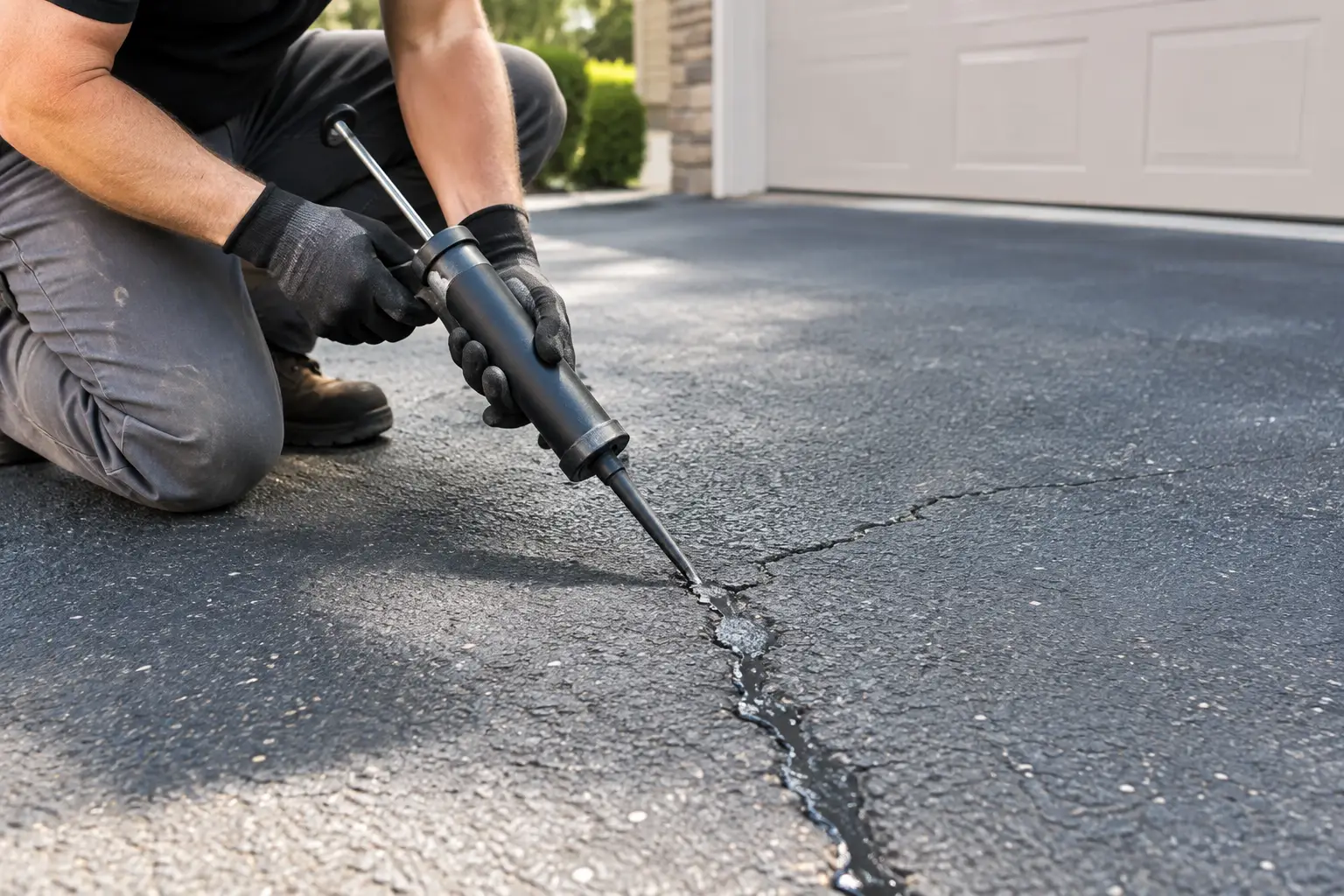
For narrow asphalt cracks, a pourable rubberized crack filler is often the simplest choice. Slowly fill the opening, moving along the crack rather than flooding one area at a time. For wider asphalt cracks, use a trowel-grade patch or filler designed for the stated crack width.
For concrete, apply a self-leveling sealant only when the product is intended for horizontal concrete joints or cracks. It can spread beyond the repair area if overfilled. For vertical movement or wider gaps in a slab, a flexible polyurethane or concrete crack sealant may be a better fit.
Fill the crack to the recommended level, usually even with or slightly below the surrounding surface. Overfilling leaves a raised line that can catch tires, collect dirt, and wear down faster. Smooth trowel-applied materials carefully, feathering the edges into the driveway.
Let the Repair Cure Before Using the Driveway
Drying time and curing time are not always the same. A filler may feel dry on top while still needing more time before foot traffic, vehicles, pressure washing, or a driveway sealer can be applied. Read the label and give the repair the full cure time whenever possible.
Keep cars off the repaired section and prevent sprinkler runoff from reaching it. If rain arrives unexpectedly, inspect the repair once conditions improve. Material that has washed out, bubbled, or separated should be removed and reapplied rather than covered with another layer.
When a Driveway Sealer Helps and When It Does Not
Crack sealing and driveway sealing are related but separate tasks. Crack filler closes individual gaps to limit water entry. A surface sealer, often called sealcoat for asphalt, adds a protective layer across the driveway and can refresh its appearance.
For asphalt driveways, sealing after crack repairs have cured can help protect against sun exposure, moisture, oil stains, and normal wear. It is not a fix for alligator cracking, potholes, or areas where the asphalt is breaking apart. Those conditions usually need patching or more substantial resurfacing.
Concrete sealers can help reduce staining and moisture absorption, but they do not hide structural cracks or level uneven slabs. If your concrete driveway has a crack that is wider on one end, has lifted edges, or is causing a trip hazard, an inspection should come before cosmetic sealing.
Avoid These Common Driveway Crack Repair Mistakes
Do not apply crack filler over a wet surface, even if the rain has stopped. Moisture trapped beneath the repair can weaken adhesion. Likewise, avoid filling a crack without removing loose material first. The sealant will bond to dust and debris instead of the driveway itself.
Another mistake is treating every crack as cosmetic. A crack near a downspout, along the garage entry, or beside a low spot may be connected to drainage problems. Water should be directed away from the driveway and foundation. Correcting runoff can make the repair last far longer.
Finally, do not expect a sealed crack to remain invisible. Particularly on older concrete, the repaired line may still show. The goal is a clean, protected, and stable surface, not necessarily a brand-new appearance from a single repair.
When to Call a Professional for Driveway Cracks
A homeowner can often seal a few narrow, stable cracks with the right materials and careful preparation. Professional help is a smart choice when cracks are wider than one-quarter inch, the driveway surface is sinking, the edges are crumbling, or water pools near the repaired area.
Property managers and commercial owners should also consider the safety and appearance of high-traffic driveways. Uneven concrete, expanding cracks, and damaged asphalt can create trip hazards and leave a poor first impression on tenants, customers, and visitors.
Davenport Handyman Services can assess visible damage, identify whether drainage or base movement is contributing to the problem, and recommend a practical repair plan. Quality materials and meticulous preparation make a real difference in how well a driveway repair performs.
A sealed crack is most effective when it is part of regular property care. Check your driveway after heavy rain, keep vegetation out of joints, and address new openings while they are still small. That simple attention can help your driveway stay safer, cleaner, and more attractive for years to come.