
Why Outlets Spark and When to Call for Repair
A brief snap when you plug something in can be unsettling, especially when it happens in a kitchen, garage, rental unit, or commercial space. Understanding why outlets spark helps you separate a small static discharge from a warning sign that calls for prompt electrical repair. If the spark is large, repeated, accompanied by heat or odor, or leaves marks on the outlet, treat it as a safety issue rather than a minor annoyance.
Why outlets spark when you plug something in
Electricity moves the moment a plug’s metal prongs make contact with the outlet. During that split second, a small blue or white spark can occur as the electrical circuit closes. This is more common when connecting a device that pulls a higher starting load, such as a window AC unit, vacuum, power tool, refrigerator, or microwave.
A tiny, occasional spark does not always mean the outlet is defective. However, the details matter. A normal spark should be small, happen only at the moment of connection, and not produce a burning smell, buzzing sound, heat, smoke, or discoloration. The plug should fit securely, and the appliance should work normally afterward.
If you see a bright flash, hear crackling after the plug is inserted, or notice the outlet feels warm, the problem may be arcing. Arcing happens when electricity jumps through the air because a connection is loose, damaged, or improperly made. Unlike a quick connection spark, arcing can create intense heat and damage outlet components, wiring insulation, and nearby materials.
Common causes of sparking outlets
A loose or worn-out receptacle
Outlets do not last forever. Repeated use can wear down the internal contacts that grip plug prongs. When a plug hangs loosely, slips out easily, or only works at a certain angle, it may not be making a solid connection. That poor contact can allow electricity to arc.
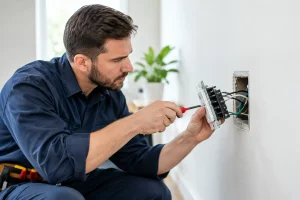
Older homes, heavily used rental properties, garages, and commercial spaces often have outlets that have seen years of use. Replacing a worn receptacle is usually a straightforward repair, but it should be done correctly so the wiring connections and grounding remain secure.
Overloaded circuits and power strips
An outlet may spark when too many devices are drawing power from the same circuit. This can happen when a power strip is overloaded, multiple high-wattage appliances share a kitchen or laundry circuit, or extension cords become a permanent solution for inadequate outlet placement.
A power strip does not increase the amount of electricity available from the wall. It only creates more places to plug things in. Space heaters, air fryers, portable AC units, hair dryers, and other high-demand equipment should not be crowded onto the same outlet or lightweight extension cord.
Damaged plugs, cords, or appliances
Sometimes the outlet is not the source of the problem. A bent plug prong, frayed cord, cracked appliance housing, or failing internal component can cause sparking when it is connected. If one appliance sparks in several different outlets, stop using that appliance until it has been inspected or repaired.
Look for melted plastic near the plug, exposed wire, scorch marks, or a plug that becomes hot during use. Do not try to straighten damaged prongs while the appliance is connected, and do not wrap a failing cord with tape as a permanent fix.
Loose wiring behind the wall
Loose wire connections inside the electrical box can cause intermittent power, buzzing, flickering lights, tripped breakers, and sparks. This issue may develop from age, movement, poor previous work, or heat created by an overloaded circuit.
Because the hazard is hidden behind the wall, it is easy to overlook. A cover plate that feels warm, a faint burning odor, or recurring breaker trips are reasons to have the outlet and circuit evaluated. Continuing to reset a breaker without finding the cause can allow the underlying problem to get worse.
Moisture in kitchens, bathrooms, garages, and outdoors
Central Florida homes deal with humidity, driving rain, pool areas, and outdoor living spaces. Humidity alone does not usually make a properly installed indoor outlet spark, but water intrusion absolutely can. Moisture around an outlet can create a short circuit, corrosion, or arcing risk.
Outlets near sinks, laundry areas, bathrooms, garages, patios, and exterior walls should have the right protection for their location. Ground-fault circuit interrupter, or GFCI, outlets are designed to shut off power quickly when they detect an imbalance that could signal electricity taking an unsafe path. If a GFCI outlet will not reset, trips repeatedly, or has visible damage, it needs professional attention.
When a spark is an emergency
Turn off power at the breaker if you can do so safely and without touching a damaged outlet. Then contact a qualified electrical professional promptly when you notice smoke, flames, a burning-plastic smell, sizzling or buzzing, black marks, melted outlet plastic, or a hot cover plate.
Also act quickly if the outlet sparks after the plug is already fully inserted, if a breaker trips repeatedly, or if lights dim when you run a certain appliance. These signs can point to a loose connection, circuit overload, or failing equipment.
Do not keep using an outlet that has sparked unusually. Avoid plugging and unplugging devices to “test” it. Do not spray cleaners, insert tools, or remove the faceplate while the circuit is energized. For a smoking outlet or electrical fire, get people away from the area, call emergency services, and never use water on the fire.
What property owners can check safely
There are a few observations homeowners, landlords, and managers can make without opening an electrical box. First, unplug the appliance by gripping the plug, not pulling on the cord. Check whether the plug is damaged, whether the cord has cracks or exposed wire, and whether the outlet has discoloration or looseness.
Next, consider what was running on that circuit. If the spark happened while a space heater, portable AC unit, microwave, or shop tool was in use, an overloaded circuit may be involved. A breaker that trips once after an obvious overload can be reset after devices are unplugged. A breaker that trips again needs investigation.
It also helps to note the pattern. Does the issue occur with every device or only one? Is it limited to one outlet, one room, or a damp location? Clear details help a repair professional diagnose the source efficiently and recommend the right solution instead of guessing.
Repairs that address the cause, not just the symptom
The right repair depends on the condition of the outlet, appliance, wiring, and circuit. A worn receptacle may need replacement. A damaged cord or appliance may need to be removed from service. An overloaded room may benefit from a dedicated circuit or better outlet placement. Moisture-prone areas may need properly protected receptacles, weather-resistant covers, or repairs to stop water intrusion.
For landlords and commercial property managers, prompt electrical attention also protects tenants, customers, and the property itself. A loose outlet can become a maintenance request today and a costly damage claim later if it is ignored. Documenting the issue and scheduling an inspection early is the practical choice.
At Davenport Handyman Services, the process starts with a smart inspection, followed by clear planning and careful execution. That approach helps property owners understand whether they are dealing with a simple outlet replacement, a device problem, or a deeper electrical concern that requires specialized repair.
A sparking outlet is not something to shrug off, but it does not always mean the worst. Pay attention to the size of the spark, the condition of the outlet and plug, and any heat, odor, noise, or breaker activity. When something feels off, stopping use early and arranging a proper inspection is one of the simplest ways to protect your home, rental property, or business.