Are Concrete Driveway Cracks Serious? A Clear Guide
A thin line across a concrete driveway can be easy to dismiss, especially when it does not affect parking or curb appeal right away. But are concrete driveway cracks serious? Sometimes they are simply part of concrete aging. Other times, they are an early warning that water, soil movement, heavy loads, or poor drainage is putting the slab at risk. The key is knowing what the crack is telling you before a manageable repair becomes a larger replacement project.
For homeowners, landlords, and property managers in Davenport and across Central Florida, a prompt inspection can protect both the property and the budget. Concrete repair is rarely one-size-fits-all. Crack width, depth, location, movement, and the condition of the ground beneath the driveway all matter.
When Are Concrete Driveway Cracks Serious?
A crack is more concerning when it shows that the slab is moving, sinking, separating, or losing support. Hairline surface cracks often stay stable for years, but wide or uneven cracks can allow water into the base beneath the concrete. Once water reaches that base, it can wash away supporting material, soften the soil, and make cracking worse.
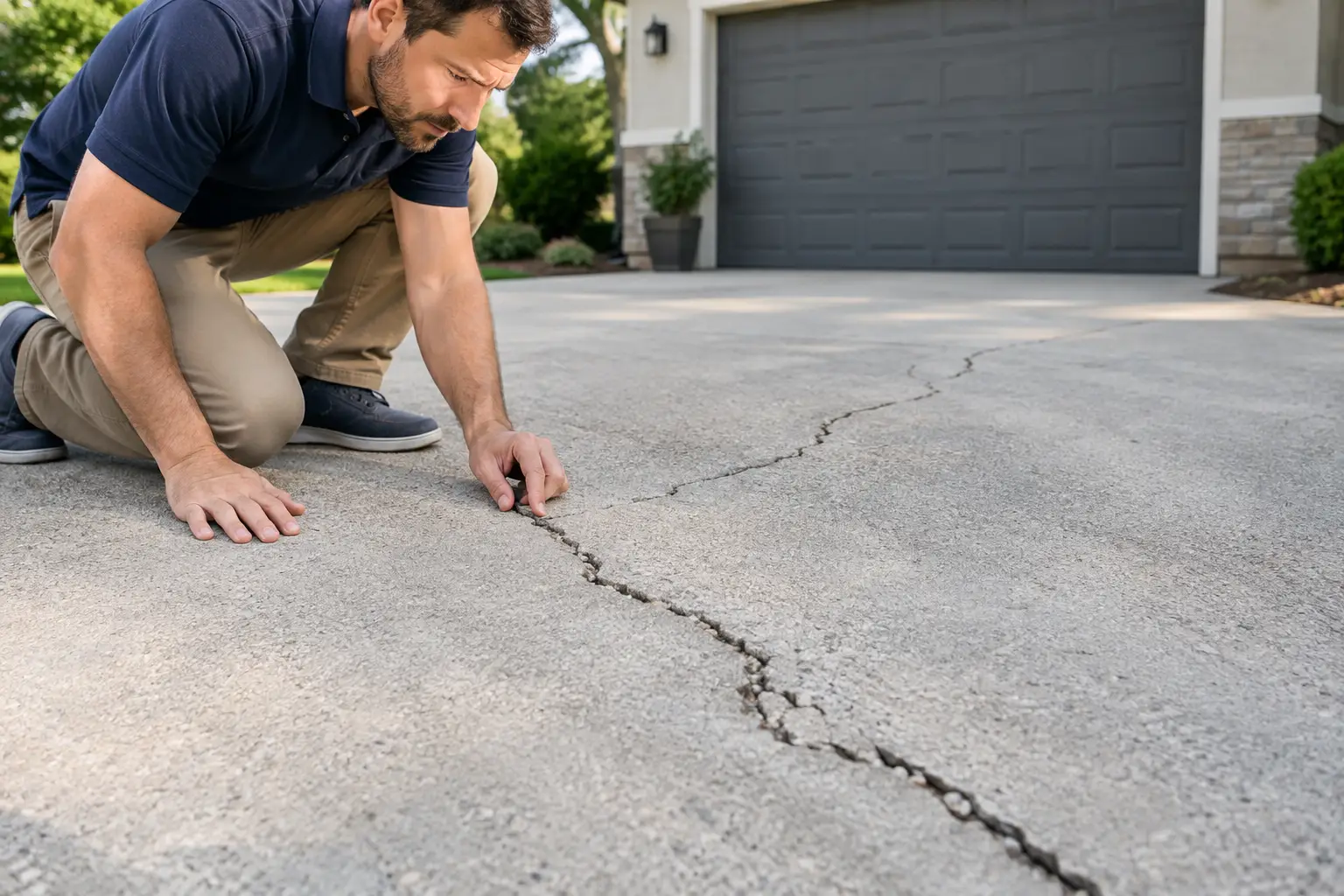
Treat the issue as a priority if a crack is wider than about one-quarter inch, if one side sits higher than the other, or if the crack keeps growing. Cracks near the garage entrance, driveway edges, or areas where vehicles turn are also worth attention because those spots experience concentrated weight and stress.
A driveway can still be usable while these warning signs develop, but waiting does not usually make the repair easier. Water intrusion and repeated vehicle traffic can turn a minor separation into broken edges, spalling, trip hazards, and sections that need to be removed.
Signs You Should Schedule an Inspection Soon
Look closely after a heavy rain or during normal driveway use. If water sits along the crack, the slab has low spots, or the crack collects dirt and weeds, moisture is already finding a path into the concrete system. Rust-colored staining, crumbling edges, and small pieces breaking away can also point to ongoing deterioration.
An uneven crack deserves special attention. Even a modest vertical difference can create a tripping hazard for family members, guests, tenants, delivery drivers, and customers. It can also signal settlement below the slab rather than a simple surface-level crack.
Call for a professional assessment promptly when you notice any of the following:
- A crack that is widening, lengthening, or branching into several cracks
- One slab section sitting higher or lower than the next
- Standing water, erosion, or soft soil beside the driveway
- Crumbling concrete around the crack or along the driveway edge
- Cracks that return after a previous patching attempt
These conditions do not automatically mean the entire driveway must be replaced. They do mean the cause should be identified before choosing a repair method.
What Causes Driveway Cracks in Central Florida?
Concrete is strong under compression, but it is not flexible. Small cracks can occur as concrete cures and shrinks, even on a well-installed driveway. Florida conditions add other factors that can speed up movement or damage.
Heavy rain is a major concern in the Davenport area. Water that pools on the driveway or drains toward its edges can erode soil and weaken the compacted base that supports the slab. If gutters discharge too close to the driveway, the runoff can create a repeating problem no crack filler can solve by itself.
Heat also plays a role. Concrete expands and contracts as temperatures change, and direct sun can place additional stress on a large exposed slab. Proper control joints help concrete crack in planned locations, but joints that are missing, poorly placed, or clogged with debris may not relieve stress as intended.
Tree roots can lift sections from below, while poorly compacted fill can settle over time. Driveways also take more abuse than many property owners realize. A slab designed for passenger vehicles may crack when repeatedly used by moving trucks, large delivery vehicles, dumpsters, RVs, or heavy equipment.
Hairline Cracks vs. Structural Cracks
Hairline cracks are narrow, shallow-looking lines, often less than one-eighth inch wide. They may appear soon after installation or gradually over time. If they remain narrow, level, and dry, they are commonly a cosmetic concern. Sealing them can help keep moisture and stains out while improving the driveway’s appearance.
Structural or movement-related cracks look different. They tend to be wider, deeper, uneven, or accompanied by visible settling. A crack that forms a noticeable gap between slab sections, catches a shoe, or creates a bump under a car tire needs more than a quick cosmetic patch.
The trade-off is simple: sealing a stable crack early is affordable preventive maintenance, while applying filler over an active crack without addressing drainage or soil movement can be money wasted. A quality repair plan should match the condition of the slab, not just cover the visible line.
Do Not Ignore the Driveway Edges
Driveway edges are more vulnerable because they have less support than the middle of the slab. When an edge cracks or breaks away, rainwater can enter the opening and erode soil from the side. Vehicles that regularly drive too close to the edge can accelerate the damage.
Repairing an edge may involve rebuilding deteriorated concrete, restoring support underneath, and improving nearby grading so water moves away from the slab. Simply adding new concrete against loose or unsupported material will not provide a long-lasting result.
What a Professional Concrete Inspection Should Cover
A useful driveway inspection goes beyond measuring a crack. The goal is to understand why it formed and whether it is still moving. A contractor should examine the crack pattern, slab height, control joints, drainage paths, driveway edges, nearby downspouts, and visible signs of soil erosion.
The inspection should also consider how the driveway is used. A residential driveway with two cars needs a different approach than a rental property, commercial entry, or home where heavier vehicles regularly park. This information helps determine whether sealing, patching, slab repair, drainage correction, or partial replacement is the most practical option.
Davenport Handyman Services approaches concrete concerns with smart inspection, meticulous planning, and careful execution. That means recommending only the work the driveway needs, with clear expectations about appearance, durability, and cost before the project begins.
Repair Options Depend on the Damage
For stable hairline cracks, cleaning and sealing may be enough. The crack must be free of loose debris and moisture so the repair material can bond properly. This helps reduce water intrusion and makes the finished surface look more maintained.
For wider cracks that are still level, flexible crack repair materials can accommodate small seasonal movement better than rigid patches. If the crack has chipped edges, the damaged concrete may need to be cut back and rebuilt with a compatible repair product.
When slabs have settled or lifted, the right solution depends on the cause. Correcting drainage may be part of the work. In some cases, a damaged section can be removed and replaced rather than repairing the entire driveway. A full replacement makes sense when deterioration is widespread, the base has failed over a large area, or multiple repairs would leave an uneven, short-lived result.
Avoid treating a driveway crack with ordinary mortar or a surface coating alone. Those materials may look acceptable for a short time, but they often fail when the slab continues to move. Proper preparation and base conditions are what make a repair last.
How to Protect Your Driveway After Repair
Once the crack is repaired, keep water from becoming the next problem. Clear leaves and debris from drainage paths, direct downspout discharge away from the driveway, and watch for standing water after storms. Do not allow heavy vehicles to sit near unsupported edges, and address small new cracks before they have time to expand.
A clean, well-maintained driveway also makes changes easier to spot. Check it a few times each year, particularly after major storms and during periods of intense heat. If a sealed crack reopens or an area begins to sink, arrange an inspection rather than repeatedly applying more filler.
A concrete driveway does not need to be flawless to be safe and functional. What matters is whether the cracking is stable, whether water is controlled, and whether the slab remains properly supported. A timely, professional evaluation gives you a practical path forward and helps keep a small crack from becoming the repair you wish you had handled sooner.