
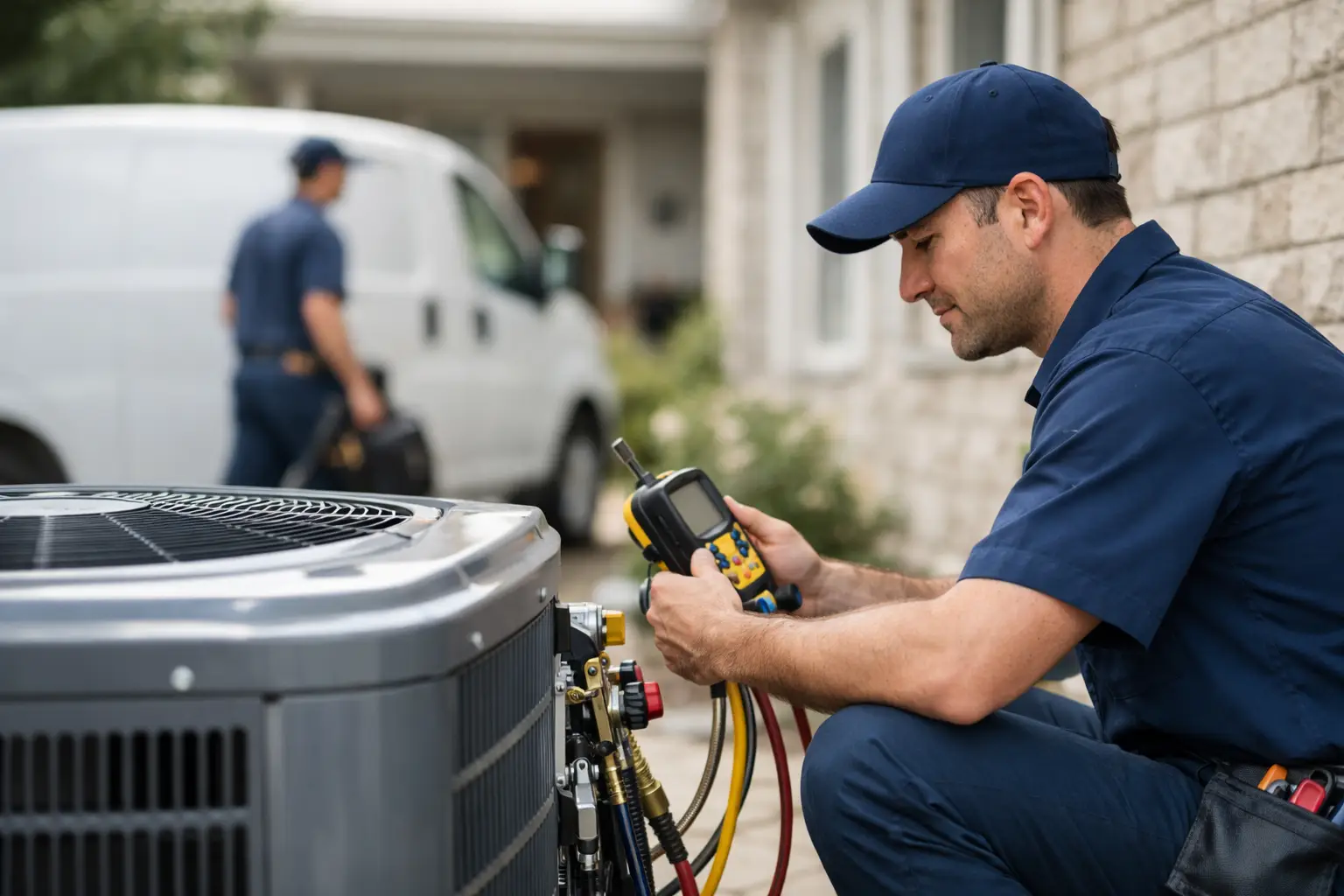
When AC Technicians Should Be Called in Davenport
A Central Florida air conditioner can go from working normally at lunch to blowing warm air by late afternoon. When that happens, AC technicians do more than replace a part or add refrigerant. They identify why the system is struggling, help prevent additional damage, and restore the dependable cooling your home, rental, or commercial property needs.
For Davenport property owners, timely service often makes the difference between a manageable repair and a costly breakdown. A unit that runs too long, leaks water, trips a breaker, or produces weak airflow is sending a message. The right response depends on the symptom, the age of the equipment, and whether the issue affects safety or the people inside the property.
What AC Technicians Check During a Service Visit
A quality service visit starts with listening. Your technician should ask when the problem began, whether cooling has changed gradually or suddenly, and whether you have noticed unusual sounds, odors, moisture, or higher electric bills. Those details help narrow the diagnosis before any work begins.
The inspection then looks at the full system rather than only the thermostat. That typically includes the indoor air handler, outdoor condenser, electrical connections, thermostat operation, condensate drain, air filter, refrigerant components, and the condition of accessible ductwork. A clogged drain line and a failing capacitor may both stop a system from performing well, but they require very different repairs.
Good diagnostics matter because symptoms can be misleading. Warm air may point to low refrigerant, but it can also result from a dirty coil, compressor problem, damaged wiring, a frozen evaporator coil, or an outdoor unit that is not running correctly. Simply treating the visible symptom can leave the underlying issue in place.
For homes with uneven temperatures, the technician may also consider airflow and insulation-related factors. A room that stays hot is not always an equipment failure. Closed or blocked vents, leaky ducts, an undersized return, direct sun exposure, or a poorly sealed door can all affect comfort. The best solution should fit the actual cause, not rely on guesswork.
Signs You Should Schedule AC Service
Some air-conditioning concerns are obvious, such as a system that will not turn on. Others build slowly and are easy to dismiss until the unit fails during a stretch of high heat. Calling early gives you more control over timing and repair options.
Schedule service when your system blows warm or only mildly cool air, runs constantly without reaching the thermostat setting, starts and stops repeatedly, or has noticeably weak airflow. New rattling, buzzing, grinding, or squealing sounds also deserve attention. Mechanical and electrical components usually become more expensive to repair when they continue operating under strain.
Water around the air handler is another common reason to call. In Florida’s humid climate, air conditioners remove a significant amount of moisture from indoor air. That moisture must drain properly. A backed-up condensate line can lead to water damage, mold-friendly conditions, and shutoff switch issues if left unaddressed.
Higher energy bills are worth investigating as well, especially if your household routine has not changed. Rising costs can be caused by reduced efficiency, dirty components, air leaks, thermostat problems, or aging equipment. An inspection provides clearer information than assuming the utility bill is simply the cost of a hotter month.
When an AC Problem Is an Emergency
Not every cooling issue requires after-hours service, but some situations should not wait. Turn the system off and seek prompt professional help if you smell burning, see smoke, hear loud electrical popping, or notice a breaker repeatedly tripping. These signs can indicate an electrical fault that needs a careful inspection.
A refrigerant-like chemical odor, hissing near refrigerant lines, or ice building up on the indoor or outdoor equipment also calls for timely attention. Do not chip ice from coils or keep resetting the thermostat in hopes of forcing the system to cool. Continued operation can damage major components.
For families with infants, older adults, pets, or anyone sensitive to heat, a complete loss of cooling can become urgent quickly. The same is true for occupied rental units and commercial spaces where indoor conditions affect tenants, customers, inventory, or daily operations. In these cases, a responsive local provider can help assess the problem and determine the appropriate next step.
Repair, Maintenance, or Replacement: How to Decide
The right answer is rarely based on age alone. A newer system with a failed electrical component may be a straightforward repair. An older unit with repeated breakdowns, declining cooling capacity, and major component issues may deserve a replacement discussion. The goal is not to push the largest project. It is to compare the real cost and reliability of each path.
Ask for a clear explanation of the issue, the repair being recommended, and what could happen if you postpone it. If replacement is suggested, request information about why the existing equipment is no longer a sensible investment. Factors such as repair frequency, system condition, energy use, refrigerant type, and the cost of a major repair all matter.
A property owner should also consider the building itself. Installing a larger air conditioner is not automatically the answer to a hot home. Oversized equipment can cool too quickly, cycle more often, and remove less humidity. Proper sizing and installation are essential for comfort, efficiency, and equipment life.
Simple Maintenance That Protects Your System
Homeowners and property managers can reduce preventable AC problems with a few consistent habits. Replace or clean the air filter on the schedule appropriate for your system and household. A clogged filter restricts airflow, makes equipment work harder, and can contribute to frozen coils.
Keep the area around the outdoor condenser clear of leaves, grass clippings, stored materials, and dense vegetation. The unit needs room to move heat outdoors. Indoors, make sure supply and return vents are open and not blocked by furniture, rugs, or boxes.
It also helps to check the condensate drain area periodically for standing water and to pay attention to changes in system performance. These are not substitutes for professional maintenance, and homeowners should not open electrical panels or handle refrigerant components. They are practical ways to spot developing concerns before comfort is affected.
For rental and commercial properties, create a simple record of filter changes, service dates, recurring complaints, and repairs. This gives AC technicians useful history and helps property managers plan maintenance around tenant needs rather than reacting only after an outage.
What to Expect From a Reliable Local Service Team
A dependable service experience should feel organized from the first call. You should know when to expect the technician, receive a clear explanation after the inspection, and understand the recommended work before it begins. Straightforward pricing and a free estimate for appropriate project work help you make decisions without pressure.
Davenport Handyman Services brings the same practical approach to AC service that it applies across home repair and property maintenance: smart inspection, meticulous planning, and careful execution. For owners managing several needs at once, having one responsive local team can simplify coordination while keeping workmanship and customer satisfaction at the center of the job.
Before the appointment, write down the symptoms you have noticed and when they occur. Mention recent power outages, thermostat changes, water leaks, or repairs performed by another provider. Clear information helps the technician work efficiently and gives you a stronger foundation for choosing the repair that protects your property.
When your air conditioner starts behaving differently, treat it as an opportunity to act early rather than a problem to put off until the hottest day of the season. Prompt attention can preserve comfort, protect equipment, and keep a small concern from disrupting your home or business.


