
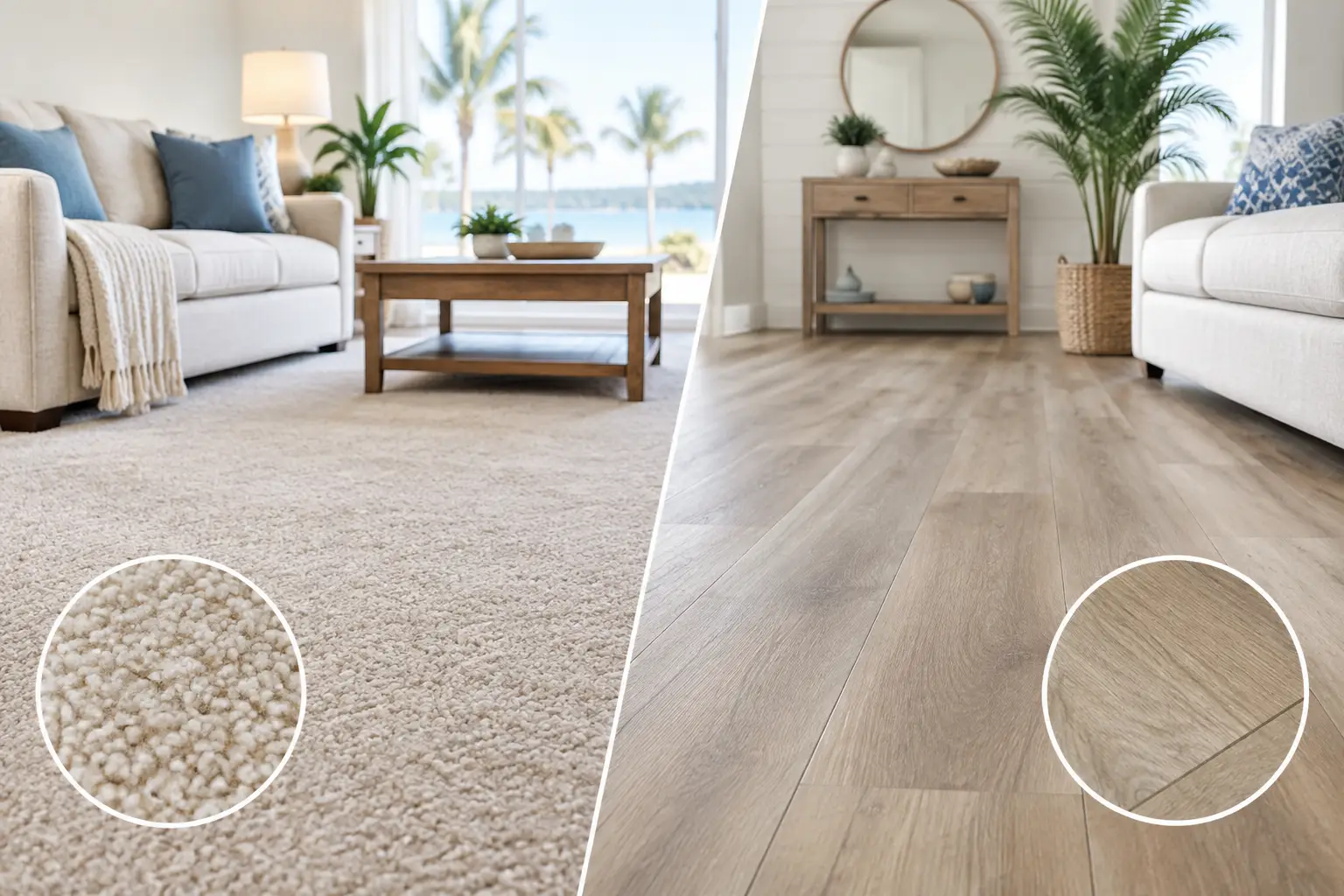
Carpet Versus Vinyl Flooring for Florida Homes
A bedroom can feel comfortable with soft carpet underfoot, while that same material may be a frustrating choice beside a busy patio door or in a rental with frequent turnovers. When weighing carpet versus vinyl flooring, the best choice is rarely about which product is universally better. It is about how the room is used, how much moisture it sees, who lives or works there, and how much maintenance makes sense for the property.
For homeowners, landlords, and property managers in Davenport, flooring also has to stand up to Central Florida humidity, sandy shoes, wet pool towels, pets, and daily traffic. A thoughtful flooring decision can improve comfort, simplify cleaning, and protect the appearance of the property for years.
Carpet Versus Vinyl Flooring: The Core Difference
Carpet is designed around softness, warmth, and sound control. It creates a quieter, more cushioned surface that works especially well in bedrooms, upstairs living areas, and spaces where comfort matters more than easy wipe-clean maintenance. Modern carpet comes in many fiber types, pile heights, colors, and stain-resistant options, so it can still be a practical material when selected carefully.
Vinyl flooring is built for resilience. Luxury vinyl plank, luxury vinyl tile, and sheet vinyl offer a durable surface that is generally water-resistant or waterproof, depending on the product and installation. Vinyl can closely resemble hardwood, stone, or tile while feeling warmer and quieter than traditional ceramic tile. It is often the more flexible choice for active homes and commercial spaces that need a clean, polished look without high-maintenance flooring.
Neither material is automatically the premium option. Quality depends on the product, proper subfloor preparation, installation methods, and whether the flooring matches the room’s demands.
Where Carpet Makes the Most Sense
Carpet earns its place in rooms intended for rest and relaxation. In bedrooms, it reduces the shock of a cool floor in the morning and gives the space a softer, more inviting feel. In an upstairs room, carpet can also reduce the sound of footsteps traveling to the floor below, which is valuable for families, multi-level homes, and rental properties.
It can be a strong choice for a formal living room or low-traffic office as well. Carpet is forgiving underfoot, making it more comfortable for children playing on the floor or anyone who spends a long time standing, sitting, or moving around the room.
The trade-off is upkeep. Carpet can trap dust, pet hair, pollen, and spills more easily than a hard surface. Regular vacuuming helps, but occasional professional carpet cleaning is usually needed to keep fibers fresh and protect the appearance of the room. In a Florida home, dampness and spills should be addressed quickly. A soaked carpet pad can create odors and may require replacement if moisture reaches the subfloor.
Carpet is generally not the right fit for bathrooms, laundry rooms, kitchens, entryways, or rooms that connect directly to a pool area. Those locations put it at unnecessary risk from water, stains, and heavy wear.
Where Vinyl Flooring Has the Advantage
Vinyl is often the practical winner for high-traffic and moisture-prone spaces. It works well in kitchens, bathrooms, laundry rooms, hallways, entryways, dining areas, and living rooms where children, pets, or frequent guests are part of everyday life. It is also a smart option for rental properties because it is durable, easy to clean, and can provide a consistent look through multiple rooms.
A properly installed vinyl floor handles everyday spills far better than carpet. Most messes can be managed with a sweep, vacuum approved for hard floors, and a damp mop. That convenience is especially helpful near exterior doors, garages, and patios, where sand and water can quickly make their way inside.
Vinyl also gives property owners more design flexibility. Wood-look planks can create a warm, continuous appearance from the living room into bedrooms. Stone-look vinyl can give a bathroom or kitchen a clean, upscale finish without the colder feel and grout maintenance associated with tile.
However, vinyl is not invincible. Sharp objects can gouge some products, and poor subfloor conditions can show through the finished surface. An uneven slab, loose flooring, or moisture issue below the floor should be identified before installation. A careful inspection and meticulous planning stage prevent problems that no floor covering can hide for long.
Comfort, Noise, and Everyday Living
If barefoot comfort is the top priority, carpet wins. It is naturally soft, warm, and forgiving. For a primary bedroom or nursery, those qualities may be worth the additional cleaning commitment.
Vinyl has improved significantly in comfort, particularly thicker luxury vinyl products with attached padding. It will not feel as plush as carpet, but it is usually more comfortable than tile and offers a stable surface for furniture, rolling chairs, and daily cleaning. Area rugs can add softness in seating areas or beside the bed without committing an entire room to carpet.
Noise deserves consideration, too. Carpet absorbs sound better than vinyl, making it useful in upstairs bedrooms, media rooms, and offices. Vinyl can create more footfall noise, although a quality underlayment or attached pad can help. In commercial settings or rentals with neighbors below, check building requirements before selecting a flooring system.
Cost Is More Than the Price per Square Foot
Flooring budgets should account for more than the material price. Removal of existing flooring, disposal, furniture moving, subfloor repair, trim work, transitions, and installation all affect the final estimate. Carpet may appear less expensive at first, but the pad, installation, and future cleaning should be part of the comparison.
Vinyl pricing has a wide range. Basic sheet vinyl can be budget-friendly, while high-quality luxury vinyl plank with a stronger wear layer may cost more upfront. That added cost can make sense in high-traffic areas because a better product is more likely to retain its appearance over time.
For landlords, the calculation often includes turnover costs. A light-colored carpet may show stains and require replacement sooner between tenants, while a durable vinyl floor can be cleaned and reused if it remains in good condition. On the other hand, carpet in bedrooms may still help a rental feel more comfortable and appealing to prospective tenants. Many properties benefit from a combination: vinyl in common areas and carpet in bedrooms.
Maintenance and Cleaning Expectations
Carpet needs regular vacuuming, prompt spot treatment, and periodic deep cleaning. Choose stain-resistant fibers if pets, children, or frequent entertaining are part of the household. Avoid soaking the carpet during cleaning, especially in humid weather, and make sure it dries completely.
Vinyl needs simpler routine care, but it still benefits from the right approach. Sweep grit often, use a mild cleaner intended for vinyl, and clean up spills promptly. Avoid harsh abrasives, steam treatments not approved by the manufacturer, and rubber-backed mats that may discolor certain vinyl surfaces. Furniture pads are a small investment that can prevent scratches and dents.
For both materials, the condition below the floor matters. Water leaks, loose toilets, failing appliances, slab cracks, and damaged subfloors should be repaired before new flooring goes down. Installing beautiful flooring over an unresolved issue can turn a straightforward project into an expensive repair.
Choosing the Right Flooring Room by Room
A mixed-flooring plan is often the most sensible option. Vinyl is typically the better choice for kitchens, bathrooms, laundry rooms, entryways, and main living spaces with frequent traffic. Carpet is often best reserved for bedrooms, low-traffic offices, and upstairs areas where quiet comfort is the goal.
Consider the people using the property. A pet-friendly family may prefer vinyl throughout most of the home. An older homeowner may value carpet’s cushioned feel in a bedroom but want slip-resistant vinyl in areas where spills are more likely. A commercial office may use vinyl for easy maintenance while adding rugs in reception or waiting areas for warmth and noise control.
At Davenport Handyman Services, flooring decisions begin with the condition of the room, not a one-size-fits-all recommendation. A smart inspection can identify moisture concerns, subfloor repairs, transition needs, and the practical details that make a finished floor look and perform its best.
Before selecting a color or pattern, walk through the room at its busiest moment. Think about wet shoes, pets, furniture, cleaning routines, and the next several years of use. The flooring that fits that real-life picture will give your property the best value and a finish you can feel confident living with.