
Water Damage Prevention Guide for Florida Homes
A brown spot on a ceiling, a musty closet, or a higher-than-usual water bill can become a major repair before the week is over. In Central Florida, heavy rain, high humidity, hardworking air conditioners, and aging plumbing all create opportunities for water to enter places it does not belong. This water damage prevention guide helps homeowners, landlords, and property managers catch those risks early and protect the value, safety, and comfort of their property.
Start With the Places Water Usually Wins
Water damage rarely begins with a dramatic burst pipe. More often, it starts with a slow drip under a sink, worn caulk around a tub, a loose roof flashing, or a clogged drain line. Because the water is hidden, it can soak drywall, flooring, cabinets, and framing before anyone sees visible evidence.
Make a habit of checking the areas where water is supplied, drained, or collected. Look beneath kitchen and bathroom sinks, around toilets, behind washing machines, near water heaters, and at the base of shower walls. Watch for staining, soft flooring, peeling paint, warped cabinet panels, rusted supply connections, or a persistent damp odor.
For rental and commercial properties, scheduled inspections are especially useful. Tenants and staff may notice a problem but assume it is minor, or they may not report it immediately. A short, routine walk-through gives property owners a chance to address small repairs before they interrupt business, displace a tenant, or require more extensive restoration work.
Protect Your Plumbing Before a Leak Becomes a Flood
Plumbing failures can release a surprising amount of water in minutes. Flexible supply lines serving toilets, sinks, refrigerators, and washing machines deserve close attention. If a hose looks cracked, corroded, bulged, or brittle, replace it before it fails. It is generally more affordable to replace an aging connection on your schedule than to repair soaked flooring and drywall after an emergency.
Everyone responsible for the property should know where the main water shutoff valve is located and how to operate it. Test the valve periodically if it has not been used in years. A shutoff that is stuck when a pipe breaks offers little protection.
Pay attention to quiet warning signs as well. A water bill that rises without a change in usage, the sound of water running when all fixtures are off, or a water meter that continues moving can point to a hidden leak. A professional inspection can help pinpoint whether the issue is a fixture, supply line, toilet seal, irrigation line, or pipe within a wall.
Do not overlook the water heater. Check its connections, the surrounding floor, and its drain pan for moisture or corrosion. Water heaters have a limited service life, and replacement planning is often far less stressful than responding to a tank failure.
Keep Bathrooms and Kitchens Properly Sealed
Bathrooms are built for water, but they are not built for water escaping behind finishes. Caulk and grout around tubs, showers, backsplashes, and countertops should be intact, flexible where needed, and free of gaps. When caulk pulls away or grout cracks, moisture can work behind tile and into wall materials.
Good ventilation matters just as much. Run the bathroom exhaust fan during showers and leave it on long enough to clear humidity afterward. If mirrors stay fogged, paint repeatedly peels, or mildew returns quickly, the fan may be undersized, blocked, or not venting correctly. Opening a window can help in some situations, but it may not be enough during Florida’s humid months.
In kitchens, inspect the dishwasher connection, garbage disposal, refrigerator water line, and sink drain. A slow leak inside a cabinet can damage the cabinet base long before it reaches the visible floor. Place a hand along the bottom of the cabinet during your monthly check. If it feels swollen or soft, schedule a repair promptly.
Manage Central Florida Rain and Roof Runoff
Florida downpours test every weak point outside a building. Gutters and downspouts should move water away from the roofline and foundation, not dump it beside the structure. Remove leaves, roof grit, and nesting debris so water can flow freely. If water spills over the gutter during rain, the problem may be a clog, improper slope, or a downspout that cannot handle the roof’s runoff.
Walk around the property after a hard rain. Look for standing water near the foundation, soil that has washed away, overflowing gutters, dripping soffits, and water entering beneath doors or around windows. These observations tell you where drainage needs to improve.
Roof maintenance deserves a professional eye, particularly after high winds or severe storms. Missing shingles, damaged flashing, cracked pipe boots, and deteriorated seals around vents can allow water into the attic. By the time a ceiling stain appears, insulation and framing may already be wet. Avoid walking on a roof unless you have the right equipment and experience. A safe inspection and targeted repair are better than turning a small roofing issue into an injury or additional damage.
Do Not Ignore Your AC System
Air conditioning is essential in Davenport, but it also produces condensation. That moisture should exit through a clear condensate drain line. When the line clogs, water can back up into the air handler, overflow a drain pan, stain ceilings, or damage nearby finishes.
Check around the indoor unit for standing water, rust, algae buildup, or a musty smell. Replace filters on schedule, since poor airflow can contribute to system performance issues and excess moisture. If your system has a secondary drain pan or float switch, make sure it is functioning as intended.
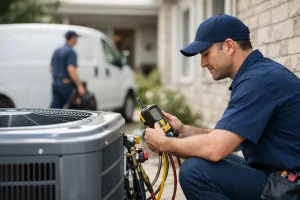
Some AC maintenance is straightforward, but a recurring drain issue, frozen coil, or leaking air handler needs qualified service. Simply clearing visible water without correcting the cause leaves the property exposed to another overflow.
A Practical Water Damage Prevention Guide for Every Season
Prevention works best when it is part of regular property care rather than a reaction to a storm or leak. A simple calendar keeps small jobs from being overlooked. At least twice a year, and after major storms, make time for these checks:
- Clear gutters, downspouts, and exterior drains, then confirm water flows away from the building.
- Inspect roof edges, window seals, door thresholds, siding penetrations, and exterior caulking for openings.
- Test toilets for movement or leaks, examine supply lines, and look under sinks and appliances.
- Check the water heater, AC drain system, attic, garage, and storage areas for moisture or staining.
- Trim vegetation away from the structure so wet leaves and branches do not hold moisture against walls or block drainage.
The right schedule depends on the age of the property, the condition of its roof and plumbing, nearby trees, and whether it is occupied full time. A newer home may need fewer repairs, but it still needs inspections. An older rental may benefit from more frequent checks because its fixtures, seals, and supply lines experience more wear.
What to Do When You Find Water
Act quickly, but safely. Shut off the water source if you can identify it and it is safe to reach. For a plumbing leak, use the fixture shutoff or main water valve. If water is near electrical outlets, appliances, panels, or wiring, do not step into the area or attempt electrical repairs yourself. Turn off power only if it can be done safely from a dry location, then call for help.
Move furniture, rugs, boxes, and other absorbent items away from the wet area when possible. Take clear photos for your records, especially for rental properties or potential insurance claims. Then arrange for the source of the water to be repaired and the affected materials to be assessed. Drying the surface alone may not solve moisture trapped behind walls, beneath flooring, or inside cabinets.
Davenport Handyman Services can help property owners identify the source of common leaks, complete repair work, and address related damage with a practical, inspection-led plan. Quick action can often limit the scope of the project and help preserve the finishes you have invested in.
A dry property is not the result of luck. It comes from noticing the small changes, maintaining the systems that handle water every day, and calling for repairs while the solution is still simple.
A brown spot on a ceiling, a musty closet, or a higher-than-usual water bill can become a major repair before the week is over. In Central Florida, heavy rain, high humidity, hardworking air conditioners, and aging plumbing all create opportunities for water to enter places it does not belong. This water damage prevention guide helps homeowners, landlords, and property managers catch those risks early and protect the value, safety, and comfort of their property.
Start With the Places Water Usually Wins
Water damage rarely begins with a dramatic burst pipe. More often, it starts with a slow drip under a sink, worn caulk around a tub, a loose roof flashing, or a clogged drain line. Because the water is hidden, it can soak drywall, flooring, cabinets, and framing before anyone sees visible evidence.
Make a habit of checking the areas where water is supplied, drained, or collected. Look beneath kitchen and bathroom sinks, around toilets, behind washing machines, near water heaters, and at the base of shower walls. Watch for staining, soft flooring, peeling paint, warped cabinet panels, rusted supply connections, or a persistent damp odor.
For rental and commercial properties, scheduled inspections are especially useful. Tenants and staff may notice a problem but assume it is minor, or they may not report it immediately. A short, routine walk-through gives property owners a chance to address small repairs before they interrupt business, displace a tenant, or require more extensive restoration work.
Protect Your Plumbing Before a Leak Becomes a Flood
Plumbing failures can release a surprising amount of water in minutes. Flexible supply lines serving toilets, sinks, refrigerators, and washing machines deserve close attention. If a hose looks cracked, corroded, bulged, or brittle, replace it before it fails. It is generally more affordable to replace an aging connection on your schedule than to repair soaked flooring and drywall after an emergency.
Everyone responsible for the property should know where the main water shutoff valve is located and how to operate it. Test the valve periodically if it has not been used in years. A shutoff that is stuck when a pipe breaks offers little protection.
Pay attention to quiet warning signs as well. A water bill that rises without a change in usage, the sound of water running when all fixtures are off, or a water meter that continues moving can point to a hidden leak. A professional inspection can help pinpoint whether the issue is a fixture, supply line, toilet seal, irrigation line, or pipe within a wall.
Do not overlook the water heater. Check its connections, the surrounding floor, and its drain pan for moisture or corrosion. Water heaters have a limited service life, and replacement planning is often far less stressful than responding to a tank failure.
Keep Bathrooms and Kitchens Properly Sealed
Bathrooms are built for water, but they are not built for water escaping behind finishes. Caulk and grout around tubs, showers, backsplashes, and countertops should be intact, flexible where needed, and free of gaps. When caulk pulls away or grout cracks, moisture can work behind tile and into wall materials.
Good ventilation matters just as much. Run the bathroom exhaust fan during showers and leave it on long enough to clear humidity afterward. If mirrors stay fogged, paint repeatedly peels, or mildew returns quickly, the fan may be undersized, blocked, or not venting correctly. Opening a window can help in some situations, but it may not be enough during Florida’s humid months.
In kitchens, inspect the dishwasher connection, garbage disposal, refrigerator water line, and sink drain. A slow leak inside a cabinet can damage the cabinet base long before it reaches the visible floor. Place a hand along the bottom of the cabinet during your monthly check. If it feels swollen or soft, schedule a repair promptly.
Manage Central Florida Rain and Roof Runoff
Florida downpours test every weak point outside a building. Gutters and downspouts should move water away from the roofline and foundation, not dump it beside the structure. Remove leaves, roof grit, and nesting debris so water can flow freely. If water spills over the gutter during rain, the problem may be a clog, improper slope, or a downspout that cannot handle the roof’s runoff.
Walk around the property after a hard rain. Look for standing water near the foundation, soil that has washed away, overflowing gutters, dripping soffits, and water entering beneath doors or around windows. These observations tell you where drainage needs to improve.
Roof maintenance deserves a professional eye, particularly after high winds or severe storms. Missing shingles, damaged flashing, cracked pipe boots, and deteriorated seals around vents can allow water into the attic. By the time a ceiling stain appears, insulation and framing may already be wet. Avoid walking on a roof unless you have the right equipment and experience. A safe inspection and targeted repair are better than turning a small roofing issue into an injury or additional damage.
Do Not Ignore Your AC System
Air conditioning is essential in Davenport, but it also produces condensation. That moisture should exit through a clear condensate drain line. When the line clogs, water can back up into the air handler, overflow a drain pan, stain ceilings, or damage nearby finishes.
Check around the indoor unit for standing water, rust, algae buildup, or a musty smell. Replace filters on schedule, since poor airflow can contribute to system performance issues and excess moisture. If your system has a secondary drain pan or float switch, make sure it is functioning as intended.
Some AC maintenance is straightforward, but a recurring drain issue, frozen coil, or leaking air handler needs qualified service. Simply clearing visible water without correcting the cause leaves the property exposed to another overflow.
A Practical Water Damage Prevention Guide for Every Season
Prevention works best when it is part of regular property care rather than a reaction to a storm or leak. A simple calendar keeps small jobs from being overlooked. At least twice a year, and after major storms, make time for these checks:
- Clear gutters, downspouts, and exterior drains, then confirm water flows away from the building.
- Inspect roof edges, window seals, door thresholds, siding penetrations, and exterior caulking for openings.
- Test toilets for movement or leaks, examine supply lines, and look under sinks and appliances.
- Check the water heater, AC drain system, attic, garage, and storage areas for moisture or staining.
- Trim vegetation away from the structure so wet leaves and branches do not hold moisture against walls or block drainage.
The right schedule depends on the age of the property, the condition of its roof and plumbing, nearby trees, and whether it is occupied full time. A newer home may need fewer repairs, but it still needs inspections. An older rental may benefit from more frequent checks because its fixtures, seals, and supply lines experience more wear.
What to Do When You Find Water
Act quickly, but safely. Shut off the water source if you can identify it and it is safe to reach. For a plumbing leak, use the fixture shutoff or main water valve. If water is near electrical outlets, appliances, panels, or wiring, do not step into the area or attempt electrical repairs yourself. Turn off power only if it can be done safely from a dry location, then call for help.
Move furniture, rugs, boxes, and other absorbent items away from the wet area when possible. Take clear photos for your records, especially for rental properties or potential insurance claims. Then arrange for the source of the water to be repaired and the affected materials to be assessed. Drying the surface alone may not solve moisture trapped behind walls, beneath flooring, or inside cabinets.
Davenport Handyman Services can help property owners identify the source of common leaks, complete repair work, and address related damage with a practical, inspection-led plan. Quick action can often limit the scope of the project and help preserve the finishes you have invested in.
A dry property is not the result of luck. It comes from noticing the small changes, maintaining the systems that handle water every day, and calling for repairs while the solution is still simple.