Fence Post Replacement: When Repair Won’t Hold
A leaning fence rarely starts as a fence problem. It usually starts below ground, where a post has rotted, cracked, shifted in loose soil, or pulled away from failing concrete. Timely fence post replacement protects the rest of the fence from unnecessary strain and helps keep your Davenport property secure, attractive, and ready for Central Florida weather.
Putting off a failed post can turn a focused repair into a larger project. As one section leans, it transfers weight to the neighboring posts, twists rails, pulls fasteners loose, and can leave gates difficult to open or close. A careful inspection identifies whether one post is the issue or whether the fence has broader structural concerns.
Signs a Fence Post Needs Replacement
Some damage is easy to see, such as a post that is visibly tilted or snapped after a storm. Other warning signs appear gradually. Wood posts may feel soft at the base, show dark decay around the soil line, or develop deep splits that make the post unstable. Metal posts can rust through near the ground or bend where a gate places extra stress on the frame.
Movement is another concern. If you can push a post and feel it shift in the ground, its footing may be cracked, undersized, or no longer holding the post at the proper depth. Fence panels that sag, rails that separate, or a gate that drags are often signs that the supporting posts are no longer doing their job.
It helps to check your fence after heavy rain, high winds, and hurricane-season storms. Central Florida’s wet ground and sudden gusts can expose weaknesses that were not obvious during dry weather. Addressing one loose post early is usually more affordable than replacing an entire damaged fence line.
When Fence Post Replacement Is Better Than Repair
A post does not always need to be removed. If the post is sound and only a rail or bracket has loosened, a targeted repair may restore stability. Likewise, a small section of surface rust on a metal post may be treatable before it affects the post’s strength.
Replacement is generally the better choice when the post is rotten below grade, cracked through, severely bent, loose in failed concrete, or too short to support the fence correctly. Adding a brace to a decayed wood post may hold temporarily, but it does not remove the source of the problem. The same is true of filling a gap around a loose post with extra concrete without checking why the original footing failed.
The material and age of the fence matter. A newer vinyl or aluminum fence with one damaged support may be an ideal candidate for a single-post replacement. An older wood fence with several soft posts, warped rails, and weathered pickets may need a more honest conversation about whether a larger repair or replacement offers better value.
What a Proper Post Replacement Involves
Quality without compromise starts with diagnosing the cause, not simply setting a new post in the old hole. The work begins by checking the affected fence section, adjacent posts, rails, panels, gates, and hardware. This smart inspection helps determine whether the replacement post must match an existing style, support a gate, or meet a particular property-line layout.
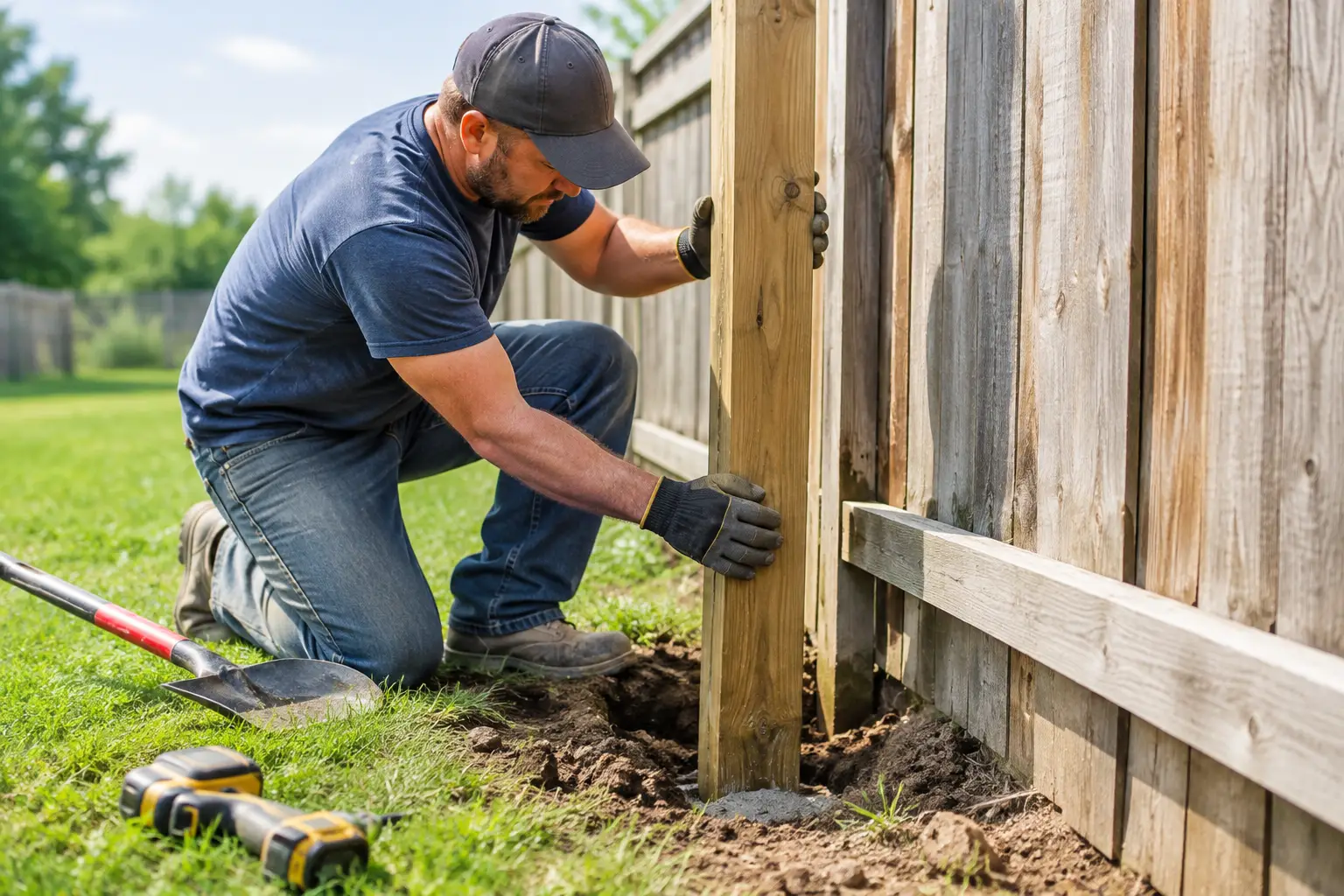
The damaged post is then disconnected from the fence carefully. In many cases, the panels or rails can be supported and reused, which helps control project costs. The old post and deteriorated concrete are removed before the hole is evaluated for proper location, depth, drainage, and soil conditions.
A new post must be set plumb, aligned with the fence line, and secured with an appropriate footing. The right depth depends on the fence height, material, local conditions, and whether the post supports a gate. Gate posts usually require additional strength because they carry repeated swinging and closing forces.
Once the post is secure, the fence section is reattached, leveled, and checked for consistent spacing. Gates should latch smoothly without dragging. A meticulous final check makes a noticeable difference: panels sit straight, rails are supported, and the repaired section blends cleanly with the rest of the boundary.
Choosing the Right Replacement Post
For wood fencing, pressure-treated posts are a common choice because they are designed to resist moisture and insect damage better than untreated lumber. They still need correct installation, especially at the ground line where decay often begins. Wood offers a traditional appearance and is easy to adapt for many residential fence styles, but it requires periodic inspection and maintenance.
Galvanized steel posts can provide dependable strength for chain-link fencing and certain wood-fence applications. Aluminum and vinyl systems often use manufacturer-specific posts and components, so matching the existing system is essential for appearance and performance. A mismatched post can create alignment problems or leave a repair looking noticeably out of place.
There is no single best material for every property. The right selection depends on the fence design, exposure to wind, gate loads, maintenance preferences, and budget. Premium materials make a difference, but they cannot compensate for poor installation or a weak footing.
Central Florida Conditions That Affect Fence Posts
Davenport fences work hard. Intense sun can dry and crack wood, while humidity and frequent rain create conditions that encourage rot. Saturated soil may loosen around a footing, particularly in areas with drainage problems. Wind is another factor, especially for privacy fences that act like sails during strong storms.
Water should not consistently collect along the fence line. If it does, replacing the post without improving the drainage may lead to the same issue again. Grading adjustments, clearing nearby debris, or addressing runoff from roofs and patios can help keep the base of the fence drier.
Property owners should also consider fence height, setbacks, homeowner association requirements, and property-line placement before making changes. A simple one-post repair is often straightforward, but moving a fence line, changing the style, or rebuilding a substantial section may involve additional rules. When the boundary is uncertain, confirm it before work begins rather than discovering a problem after materials are installed.
Why Professional Installation Can Save Time and Materials
Removing an old post is more demanding than it looks. Concrete can be heavy, roots may surround the footing, and panels can shift when their support is removed. An incorrect cut or a rushed removal can damage reusable rails, pickets, vinyl panels, or nearby landscaping.
Professional fence repair provides a clear process: inspect the damage, plan the repair around the existing fence and site conditions, then complete the work with accurate alignment and durable materials. For landlords and property managers, this also means fewer calls about a dragging gate, unstable boundary, or unsafe loose section after the repair is complete.
Davenport Handyman Services can assess the condition of your fence, explain practical repair options, and provide a free estimate tailored to the work required. Whether the issue is one storm-damaged post or a deteriorating section affecting a rental or commercial property, prompt attention helps preserve the fence you already have.
Simple Steps to Protect New Fence Posts
After a post is replaced, inspect the fence line a few times each year and after severe weather. Keep soil, mulch, and standing water from building up excessively against wood posts. Trim vegetation that holds moisture against the fence or blocks access for routine checks.
For wood fences, maintain any protective stain or sealant as recommended for the product and the fence’s exposure. Tighten loose hardware early, and do not ignore a gate that begins to sag. Gates place concentrated pressure on posts, so a small alignment issue can become a costly failure if it continues.
A straight, solid fence quietly does its job every day: defining your space, supporting privacy, and improving curb appeal. If a post is starting to lean, the best time to address it is while the rest of the fence is still standing strong.