How to Winterize Outdoor Faucets Before a Freeze
A hard freeze can turn a small outdoor faucet problem into a flooded wall, damaged siding, or a surprise water bill. Even in Davenport and across Central Florida, where freezing temperatures are usually brief, exposed plumbing can freeze overnight. Knowing how to winterize outdoor faucets gives you a simple, affordable way to protect your home, rental property, or commercial building before a cold snap arrives.
Outdoor faucets, also called hose bibbs or spigots, sit at the exterior edge of your plumbing system. That makes them more exposed than pipes inside a conditioned home. A few minutes of preparation can remove trapped water, reduce the risk of pipe damage, and give you a chance to catch an existing leak before temperatures drop.
Why Outdoor Faucets Freeze and Burst
Water expands as it freezes. When water remains inside an exposed faucet, hose, or nearby pipe, the expanding ice creates pressure that the plumbing may not be able to handle. The visible faucet is not always where the damage occurs. A pipe can split farther inside the wall, where the break may go unnoticed until temperatures rise and water begins flowing again.
A standard outdoor faucet is especially vulnerable because water stays close to the exterior wall. A frost-free faucet offers more protection because its shutoff point sits farther inside the home, but it is not invincible. A connected hose, a failed interior shutoff valve, or an improperly pitched faucet can still leave water in the line.
In Central Florida, many homeowners assume winterizing is unnecessary because freezes are uncommon. It depends on the forecast, the age of the home, where the faucet is located, and whether the area is sheltered from wind. A faucet on the north side of a building, near an open patio, or on a vacant rental property deserves extra attention when temperatures are expected to stay near or below freezing for several hours.
How to Winterize Outdoor Faucets Step by Step
The goal is straightforward: disconnect anything holding water at the faucet, shut off the water supply when possible, and drain the line. Start before the cold arrives, preferably during daylight when you can inspect the faucet and surrounding wall clearly.
Disconnect and Drain Every Garden Hose
First, remove garden hoses, splitters, spray nozzles, timers, pressure washers, and other attachments. A hose left connected can trap water against the faucet, even when the faucet itself is frost-free. The trapped water can freeze, expand, and transfer pressure back into the faucet body or supply line.
Drain each hose completely, coil it loosely, and store it in a garage, shed, or other protected area. If a hose is too long to bring inside, elevate one end and let gravity drain it before storing it off the ground. Also drain any hose reel or irrigation attachment connected to the faucet.
Once the hose is removed, turn the outdoor faucet on briefly. This confirms that water is flowing normally before you shut down the supply. If the faucet drips continuously, has weak pressure, or sprays around the handle, make a note of it. Freezing weather can make a worn washer, loose packing nut, or cracked fitting worse.
Find the Interior Shutoff Valve
Many homes have an interior shutoff valve serving each exterior faucet. It may be in a garage, utility room, laundry area, basement, crawlspace, or access panel. In some properties, the valve is near the water heater or where the main water line enters the building.
Turn the interior shutoff valve clockwise until it stops. Avoid forcing an old valve that feels seized, as excessive force can damage it or cause a leak. If you cannot find a dedicated shutoff, do not turn off your main water supply unless you understand how it affects the rest of the property. Most homeowners only need to shut down the individual exterior line.
After closing the interior valve, return outside and open the faucet. Water should run briefly and then slow to a drip or stop as the line drains. Leave the faucet open while the line drains. This releases pressure and gives any remaining water room to expand rather than pushing against a closed fixture.
Open the Bleeder Valve if Your Plumbing Has One
Some interior shutoff valves include a small bleeder cap or screw on the side of the valve. With the exterior faucet open and a small container or towel underneath, loosen the bleeder slowly. A small amount of water should drain from the line.
Close the bleeder once the water stops. Then leave the outside faucet open for the duration of freezing weather. This step is particularly useful for standard hose bibbs because it removes water from the portion of pipe most exposed to cold air.
If there is no bleeder valve, opening the exterior faucet after shutting off the supply will still allow much of the water to drain. The amount depends on how the pipe is installed and whether it slopes toward the faucet.
Install an Insulated Faucet Cover
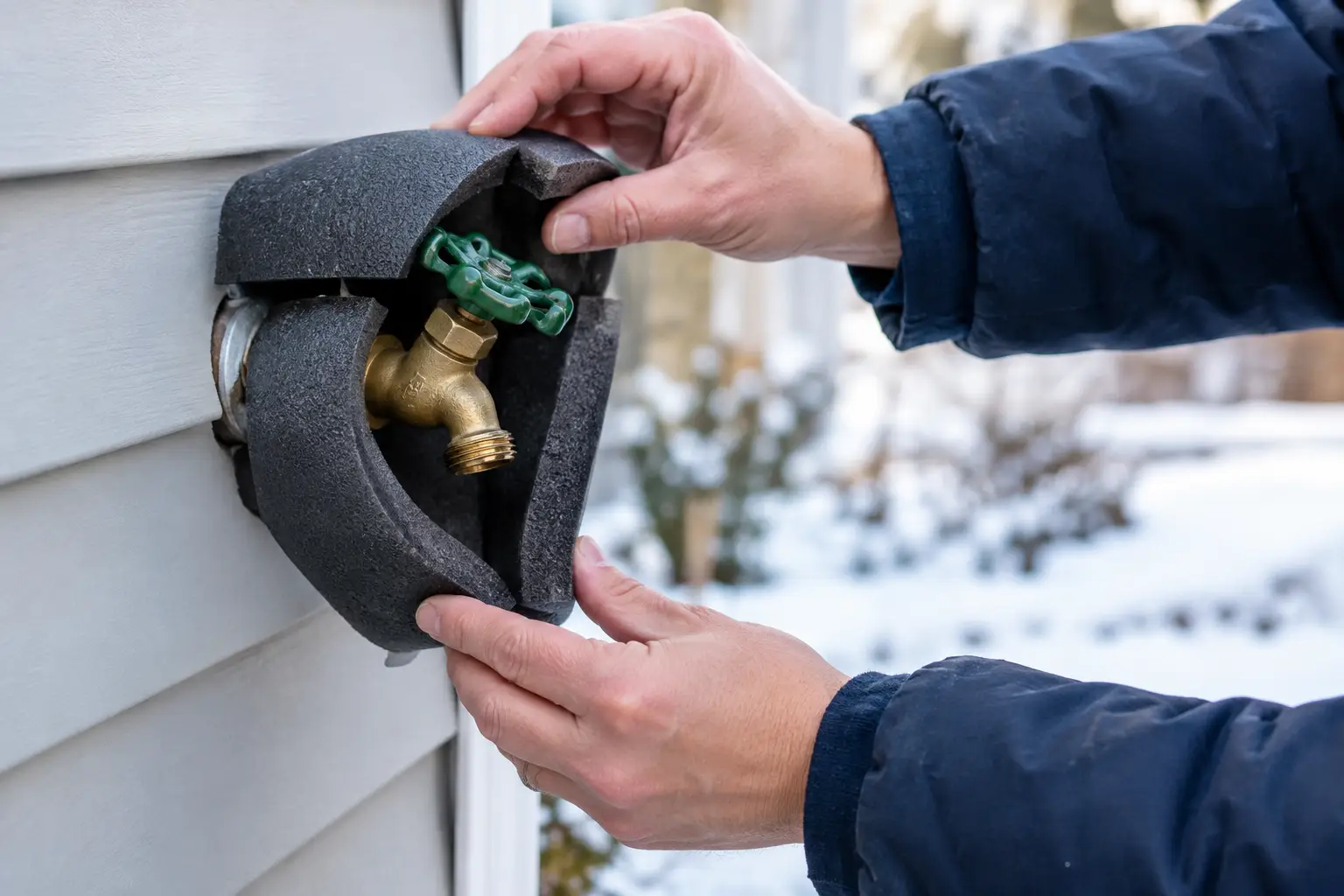
An insulated outdoor faucet cover adds a practical layer of protection, especially for faucets without an interior shutoff valve. Choose a cover that fits snugly around the faucet and seals against the exterior wall. Secure it according to the manufacturer’s instructions so wind cannot blow it loose overnight.
A faucet cover is helpful, but it is not a substitute for disconnecting hoses and draining the line. Think of it as insulation, not a guarantee. During an extended or unusually severe freeze, insulation slows heat loss but cannot always prevent freezing on its own.
For a short Central Florida cold snap, a cover combined with a disconnected hose is often sufficient for a frost-free faucet in good condition. Older homes, exposed pipes, and standard faucets benefit most from shutting off and draining the water supply as well.
Check the Faucet Before You Call the Job Done
Winterizing is also a quick inspection opportunity. Look for corrosion around the spout, drips from the handle, loose mounting hardware, cracked caulk around the wall penetration, and damp spots on the siding or masonry. A faucet that moves when you turn the handle may have a loose connection inside the wall.
Pay attention to the interior area behind the faucet if it is accessible. Signs of moisture, staining, mildew, or soft drywall can point to a leak that existed before the freeze. Addressing those issues early is far less disruptive than repairing a burst pipe after water has damaged insulation, flooring, or framing.
Property managers should include exterior faucets in seasonal inspections for vacant homes and rental units. A tenant may not realize that a connected hose or dripping faucet is a freeze risk, particularly when a cold-weather advisory arrives with little notice.
Common Mistakes That Leave Faucets at Risk
The most common mistake is leaving a hose connected because the faucet is labeled frost-free. Frost-free faucets still need to drain properly, and a hose blocks that drainage. Another frequent problem is closing the outdoor faucet after shutting off the interior valve. Leaving the faucet open is generally the better choice because it relieves pressure in the drained line.
Avoid using open flames, heat guns, or torches to thaw a frozen faucet or pipe. Those methods can damage plumbing materials, scorch siding, and create a fire risk. If you suspect a pipe is frozen, turn off the water to the affected area if possible and use gentle warmth only where it is safe and accessible. A professional inspection is the right next step if you see swelling, cracks, leaks, or no water flow after temperatures recover.
Do not overlook attached plumbing features. Outdoor kitchens, pool equipment, irrigation backflow devices, exposed pipes near a garage, and unheated utility areas may need separate cold-weather protection. Each system has different valves and drainage requirements.
When to Schedule a Plumbing Repair
Call for help if the faucet will not shut off, the interior valve is stuck, water continues running after you close the supply, or you find a leak inside or outside the wall. You should also schedule an inspection if the faucet has frozen previously. Repeated freezing can weaken fittings even if no obvious leak appeared at the time.
Davenport Handyman Services can inspect exterior faucet concerns, identify vulnerable plumbing components, and provide practical repair solutions built around your property’s needs. For homeowners, landlords, and commercial property managers, prompt maintenance helps prevent a small cold-weather issue from becoming a larger restoration project.
When the forecast calls for freezing temperatures, do not wait until the evening rush to protect your faucets. Disconnect the hose, drain the line, cover the fixture, and take a close look at what your plumbing is telling you. That small bit of preparation can keep your property dry, protected, and ready for warmer weather.