How to Fix a Running Toilet and Stop Water Waste
A toilet that keeps refilling after every flush can waste a surprising amount of water, even when the sound seems minor. Learning how to fix a running toilet starts with identifying where that water is going: over the overflow tube, through a worn flapper, or out of a fill valve that is no longer shutting off correctly.
Most running-toilet repairs are straightforward, inexpensive, and manageable with basic tools. Still, the right repair depends on the cause. Replacing a flapper will not solve a fill valve set too high, and adjusting the float will not stop water from slipping past a warped flush valve seat. A quick, careful inspection saves time and helps prevent a higher water bill.
What Causes a Toilet to Keep Running?
Remove the tank lid and set it on a folded towel or stable surface. Tank lids can crack easily, and a replacement is often more difficult to find than the internal toilet parts. With the lid off, flush the toilet once and watch what happens as the tank refills.
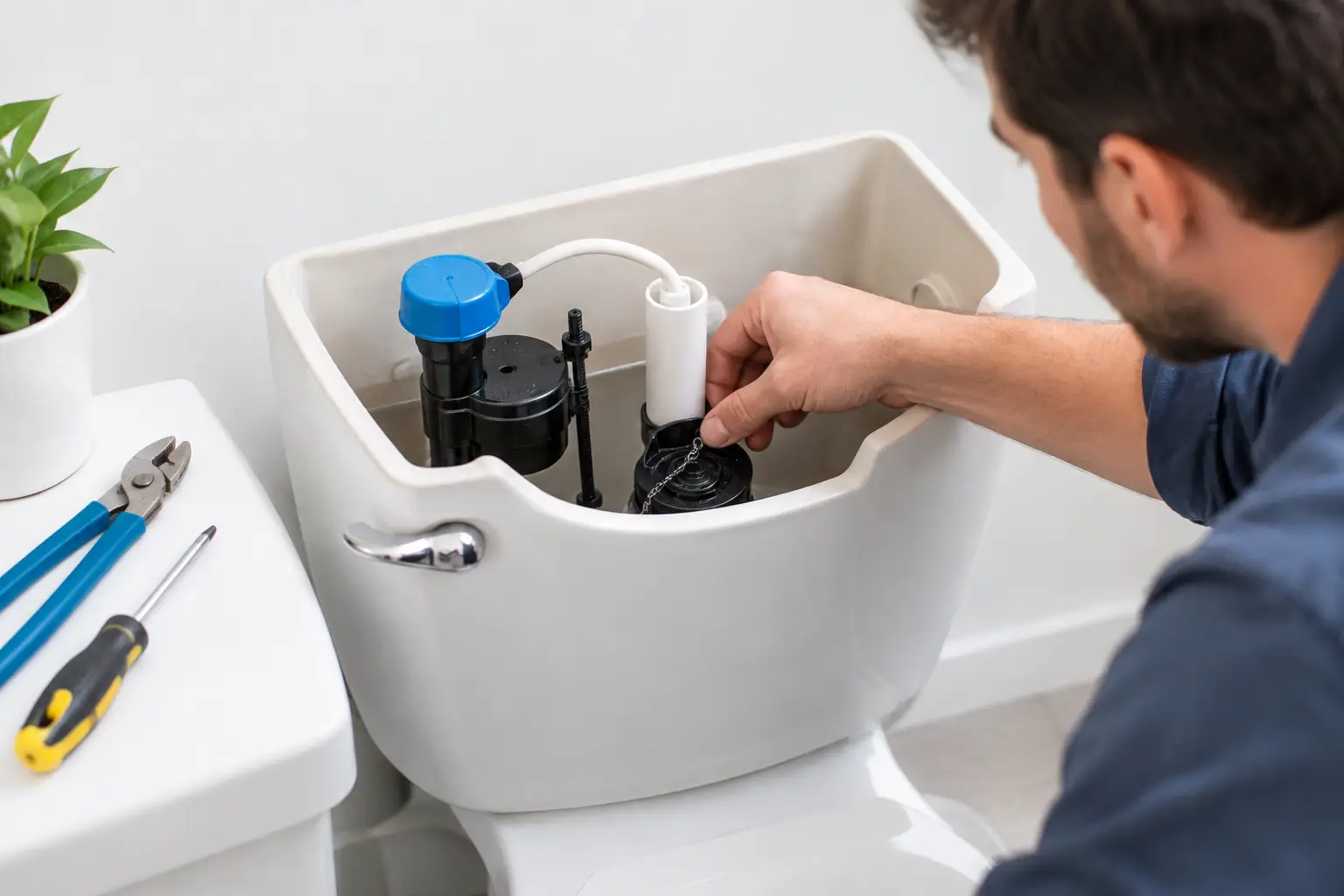
A standard toilet tank has a fill valve, a float, an overflow tube, a flapper, and a chain that connects the flapper to the flush handle. When everything works properly, the flapper seals after flushing, the tank fills to the correct level, and the fill valve shuts off. When one of those parts is worn, misaligned, or adjusted incorrectly, water continues moving.
The most common causes are a leaking flapper, a chain that is too tight or tangled, a water level set too high, or a failing fill valve. Mineral buildup is also common in Central Florida homes. Hard water can leave deposits on seals and moving components, making a previously reliable part stick or lose its seal.
How to Fix a Running Toilet Step by Step
Check the water level first
Look at the overflow tube, which is the open vertical tube near the center of the tank. The water level should sit below the top of that tube, usually about an inch below. If water is flowing into the overflow tube, the fill valve is allowing the tank to overfill.
Many newer fill valves have an adjustment screw or clip that lets you lower the float. Turn the adjustment gradually, flush, and allow the tank to refill before checking the level again. On older ball-float systems, the float arm may need a small adjustment. Do not force old metal hardware, especially if corrosion is visible.
If lowering the float does not stop the flow, the fill valve may be worn out. Replacing it is usually more reliable than trying to repair an aging valve, particularly when it makes hissing noises, refills slowly, or fails intermittently.
Test the flapper for a slow leak
If the tank reaches the proper level but the toilet cycles on every few minutes, the flapper is the likely issue. The rubber flapper at the bottom of the tank is supposed to seal the flush valve opening. Over time, rubber can become stiff, warped, coated with mineral deposits, or simply worn thin.
A simple dye test can confirm the problem. Add a few drops of food coloring to the tank water and wait 15 to 20 minutes without flushing. If color appears in the toilet bowl, water is leaking past the flapper.
Turn off the shutoff valve behind or beside the toilet, then flush to empty most of the tank. Unhook the old flapper from the overflow tube and disconnect its chain from the flush handle. Before installing a replacement, wipe the rim of the flush valve opening clean with a soft cloth. A new flapper still may leak if it rests on a dirty or rough surface.
Match the replacement flapper to the old one whenever possible. Toilets use different sizes and styles, and a universal flapper is not always the best fit. Attach the chain with a small amount of slack. If it is too tight, the flapper may not close fully. If it is too loose, the handle may not lift the flapper high enough for a complete flush.
Inspect the chain and flush handle
Sometimes the part is fine, but the connection is not. A chain caught under the flapper or wrapped around the overflow tube can prevent a proper seal. Straighten the chain and make sure it hangs freely.
Also check the flush handle inside the tank. If it sticks in the down position, it can hold the chain up and keep the flapper open. A loose handle nut or corroded lever can often be tightened or replaced without replacing the entire toilet.
Replace a failing fill valve
When a fill valve will not shut off, replacement is usually the practical solution. Start by turning off the water supply and flushing the toilet. Place a small bucket and towel beneath the tank, because some water will remain in the supply line.
Disconnect the supply line from the bottom of the tank, remove the old fill valve, and install the new unit according to its height markings. The refill tube should clip to the top of the overflow tube, not extend down inside it. A tube pushed too far into the overflow pipe can create a siphoning issue that causes the toilet to refill unexpectedly.
After reconnecting the supply line, turn the water on slowly and check every connection for drips. Set the water level, flush two or three times, and listen for the valve to shut off completely.
Tools and Parts That Make the Job Easier
For many toilet repairs, a small setup is all you need:
- Adjustable pliers
- A sponge, towel, and small bucket
- Food coloring for a flapper leak test
- A compatible replacement flapper or fill valve
- A screwdriver, depending on the valve and handle style
Avoid using harsh chemical cleaners inside the tank. Some products can damage rubber seals, plastic parts, and metal components. A soft cloth and mild cleaning solution are usually enough to remove visible mineral buildup around the flapper and flush valve opening.
When a Running Toilet Needs Professional Repair
A running toilet is often a simple maintenance issue, but there are times when a professional inspection is the smarter choice. If the toilet runs after you replace the flapper and fill valve, the flush valve seat may be cracked, warped, or damaged. Repairing that part may require removing the tank from the bowl, which is more involved and creates a greater risk of breaking older porcelain or bolts.
Call for help if water is leaking onto the floor, the shutoff valve will not close, the tank has a visible crack, or the toilet rocks when you sit on it. Water around the base can point to a failed wax ring, condensation issue, loose supply connection, or a hidden plumbing problem. The source matters, especially in rental properties and commercial restrooms where moisture can damage flooring and subflooring before it is noticed.
Property managers may also want a professional repair when several toilets show similar symptoms. Repeated failures can signal hard-water wear, aging supply components, inconsistent water pressure, or deferred maintenance across the property. Addressing the pattern can be more cost-effective than responding to one emergency at a time.
Davenport Handyman Services can inspect the toilet, identify the source of the water loss, and provide a clear recommendation for repair or replacement. The goal is not just to stop the sound in the tank, but to leave the fixture operating safely and reliably.
Prevent the Problem From Returning
Check inside toilet tanks a few times a year, especially in vacant rentals, seasonal homes, and high-use bathrooms. Listen after flushing. The fill cycle should end cleanly, without a lingering hiss or a tank that restarts several minutes later.
Replacing worn flappers before they fail completely, keeping the tank free of harsh chemicals, and addressing mineral buildup early can extend the life of internal parts. If your toilet is older and needs frequent repairs, compare the combined cost of parts and labor with the value of a new water-efficient fixture. Repair is often the affordable choice, but replacement can make sense when the toilet has recurring leaks, cracks, or poor flushing performance.
A quiet toilet should stay quiet after the tank fills. Taking care of that small sound now protects your water bill, your flooring, and the comfort of everyone using the space.